 Written by HLRBO Staff|
Last updated
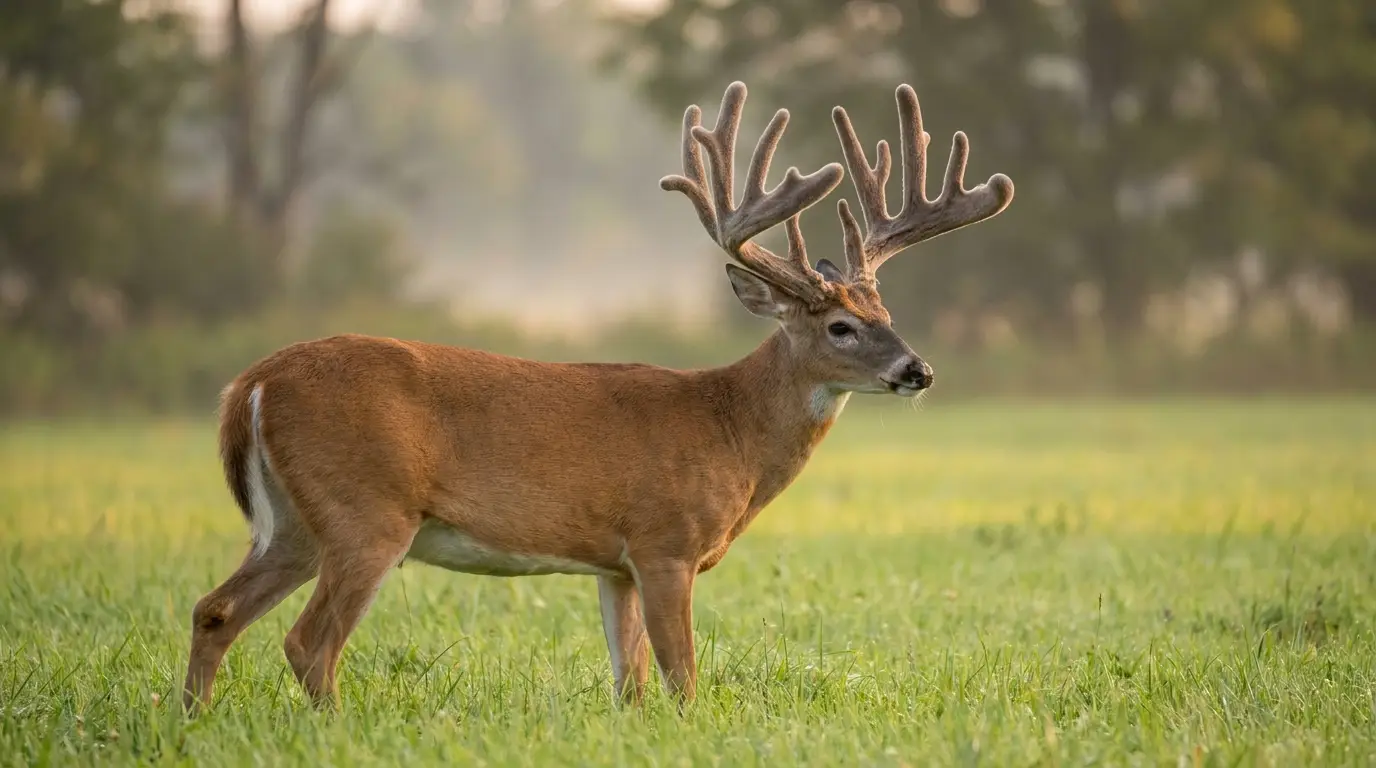
Florida's Zone A archery season opened August 1, 2026 and closes August 30, and South Carolina and Utah followed on August 15. By the morning of September 6, hunters in five more states will be in the field. Every one of those openers falls before the date the only published U.S. study on the subject says 95 percent of bucks have peeled velvet.
The 2026 Openers, Earliest First
Here is what the agencies have on the record, verified state by state on August 16, 2026.
Florida is first and it is not close. The Fish and Wildlife Conservation Commission sets Zone A archery at August 1 through August 30, 2026. South Carolina is next: Game Zones 3 and 4 open August 15, with Zone 4 archery-only through August 31 and Zone 3 open to any legal weapon from day one, both buck-only through September 14. Utah opens the same day, with the 2026 Big Game Application Guidebook setting general-season buck deer archery at August 15 through September 11. Idaho splits: the 2026 Big Game Seasons and Rules brochure puts controlled archery hunts in units 44 and 45 at August 15 through September 14, antlered only, while the general archery-only seasons run August 30 through September 30 in most units. A handful of Idaho units sit far outside that window, with Unit 2 at November 1 through December 1, Unit 28 at December 1 through 31, and Unit 39 at November 10 through 30.
Then the calendar bunches. Delaware and Wyoming both start September 1, with Delaware archery and crossbow running to January 31 and Wyoming's special archery period running September 1 to September 30 in most general hunt areas, per the Chapter 6 deer regulation document dated April 22, 2026. Sixteen general areas close that period on September 14 instead, and others do not open it until October or later. North Dakota opens at noon Central on September 4. Kentucky takes the first Saturday, with archery deer opening September 5 and closing January 18, 2027. Montana matches it, with Fish, Wildlife and Parks setting archery at September 5 through October 18.
One state belongs on this list and is not getting a date here. Arizona's over-the-counter archery deer season is widely reported as opening in late August 2026, but the Game and Fish Department's 2026 hunt tables could not be confirmed, and a wrong opener is worse than a missing one. The same caution applies everywhere: wildlife management areas, controlled hunts and CWD zones run their own calendars.
Which of Those Openers Actually Falls in Velvet
The mechanism is light, not temperature. University of Missouri Extension, in a publication by Robert Pierce II, Jason Sumners and Emily Flinn, describes the growth half of the cycle plainly: growing day length reduces melatonin production, which drives the hormone cycles behind antler growth, and "by August, growth slows and the antlers begin to mineralize, or harden." Shortening days after the June solstice reverse that signal, and it is the reversal that ends velvet. Virginia's Department of Wildlife Resources puts the second half in one line: "By late summer, as day length decreases, testosterone levels begin to increase, the form is filled, and the antler begins to harden." The shed itself "occurs rapidly, usually in less than 24 hours."
For actual dates there is exactly one published phenology from a wild U.S. population. Bodin Wilson, Logan Dietrich and Brian Peterson of the University of Nebraska at Kearney ran camera traps along the Platte and Loup rivers and published in Western North American Naturalist in 2023. Their finding: "The earliest observation of velvet shedding occurred on 22 August, whereas the latest observation of velvet retained on antlers was 25 September." The process "spanned about 35 days, with 95% of velvet shedding occurring by 17 September." Older bucks were quicker, shedding 13 percent sooner on average than 1.5-year-olds.
Line the two calendars up and something falls out that neither source assembles. Four of the verified 2026 openers land on or before August 15, at least seven days before the earliest velvet shed documented in a wild American population, and twenty-one days ahead of it in Florida's Zone A. Idaho is one of those four on the strength of its two controlled archery hunts in units 44 and 45, not its general season, which is why it turns up twice in this paragraph. Counting each state once, by its general opener, all nine fall before September 17. Kentucky and Montana beat that 95 percent mark by twelve days, Idaho's general opener by eighteen.
Here is the honest limit on that. The Nebraska work is one population, in riparian woodlands along the Platte and Loup rivers, in one year, and photoperiod at Florida's latitude runs on a different curve. Treat those dates as a calibrated northern reference, not a national schedule, and treat your own cameras as the survey that governs your property.
Hunting a Summer Pattern Before It Breaks
One thing to square before the tactics, because it decides how much of this is yours. What follows is whitetail method, built on standing corn, soybeans, food plots and the staging cover between bed and field, and both studies behind it are whitetail studies. General archery in Utah, Idaho, Wyoming and Montana is mostly mule deer hunting, and Wyoming's own 2026 season table says so in the limitations column, area after area: antlered mule deer or any white-tailed deer. An August opener in that country is a glassing game before it is a stand game, and what carries over is the pressure math and the thermals, not the field edge.
The best-documented early-season buck data comes from Clint McCoy's Auburn University work at Brosnan Forest, a 6,400-acre South Carolina property where he collared 37 bucks and logged more than 116,000 GPS locations. One 2.5-year-old shifted his home range outright for the early season. Another covered more than four miles in a single night to reach neighboring soybeans. A 4.5-year-old fed a field on a schedule you could set a watch by, and never approached it before 9 p.m.
That is the whole early-season problem. The pattern is real, it reads off cameras, and much of it happens in the dark. It is worth hunting only where its daylight edge touches something you can sit, which usually means staging cover between bed and field rather than the field itself.
It also has an expiration date. Velvet shed and the loosening of bachelor groups run on the same rising testosterone, which is why a group that fed together all August can be four separate deer inside a week. Then the food moves. Where oaks are dropping, movement leaves the green fields for individual producing trees, the shift covered in the 2026 acorn picture. The tell is not the calendar. It is acorn caps on the ground.
Heat, Thermals and the Overrated Waterhole
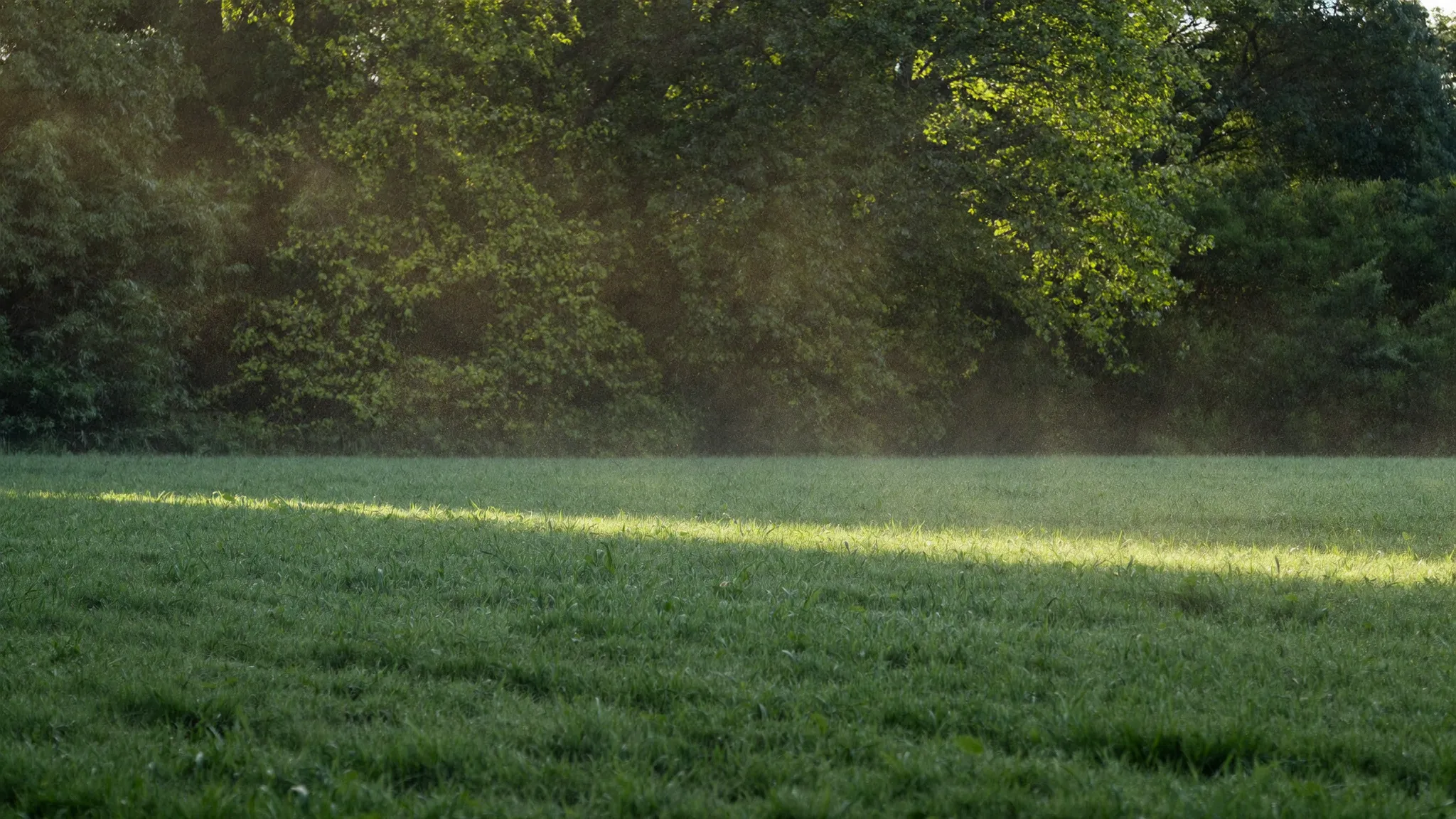
Early openers are hot openers, and heat has a documented habitat consequence. Research on male white-tailed deer in south Texas published in Wildlife Biology found midday selection of woody vegetation is driven in part by the need for thermal cover to reduce heat loads. Shade is not a comfort preference on a 92-degree afternoon. It is where the deer are.
Thermals matter more in early September than in November, because the swing between dawn and mid-afternoon is bigger. The National Deer Association's Anthony Harris gives the rule: morning sun lifts ground-level air, evening cooling pulls it back down, so "hunt high in the mornings and low in the evenings." He names the exception too, that north-facing slopes hold falling currents later into the morning.
Water is where the conventional wisdom is weakest. Deer need roughly 1.5 to 3 quarts per day per 100 pounds of body weight, but NDA's own accounting is that summer forage is succulent enough to meet most of that through food and digestion. A stock tank in a droughty Texas September is a real funnel. The same tank in a wet Kentucky September, ringed with green browse, is a place to burn an afternoon.
The Stand You Burn in August
McCoy's collars produced the number every early hunter should have taped inside the truck. Across that Brosnan Forest dataset, the odds of a buck entering the harvest zone during daylight were cut in half after 12 hours of hunting pressure in one location over a week. Avoidance ran three days on average, and by the fourth and fifth days the response was no longer distinguishable from neutral.
Read that both ways. Three sits in the same tree in opening week will cost you the stand. One sit followed by five days off costs almost nothing. An early opener is the one point in the season when you know where a mature buck is going and have not yet told him you know.
Access discipline is harder in September than most hunters treat it. Thick woods hide your walk in and also mean you will bump bedded deer you never see. Standing corn and full canopy make scent hang instead of disperse. Walk in on a creek or a mowed edge, not a food plot.
Late August Is the Last Honest Window
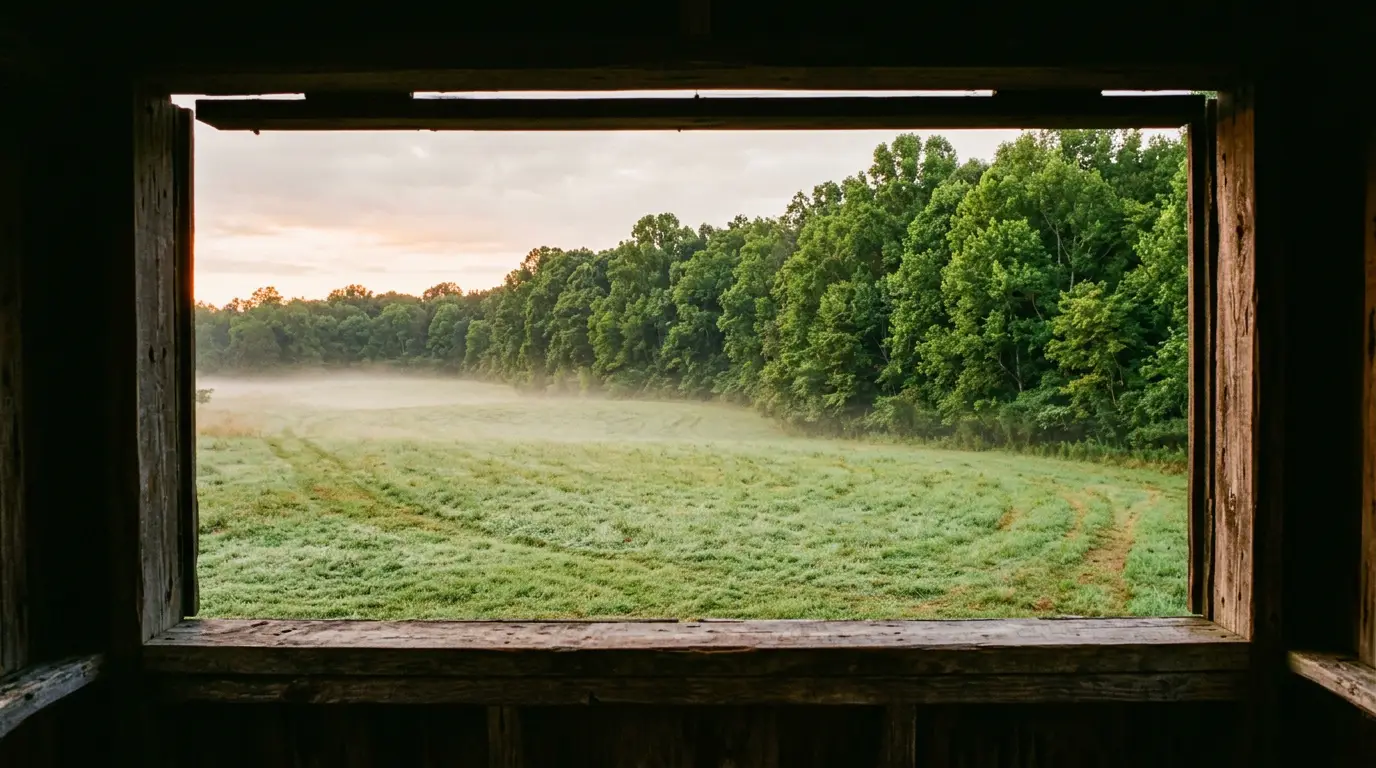
An early opener rewards a hunter who already has ground. There is no version of Kentucky's September 5 opener where a hunter starts looking for access on September 1 and gets a scouted, hung, glassed property out of it. Cameras need three weeks to say anything. A pattern read on August 10 is worth something on September 5. One you started reading on September 3 is a guess with a battery in it.
That makes the back half of August the last honest window to lock a lease for an early season, and the properties with standing beans and a mixed oak component go first. Wherever your state lands on the calendar, the work that makes an opener count happens before it.
HLRBO connects hunters with landowners across the country, with verified listings, real lease agreements, and secure payments behind every booking. Read the cover types and the ag before you read the price, and see more seasonal hunting coverage while you compare. Find a lease or subscribe to become an HLRBO member here.