 Written by HLRBO Staff|
Last updated
USDA has opened a rewrite of the rule that decides which national forest roads and trails you can legally drive, and the first comment window closes at 11:59 p.m. Eastern on September 23, 2026. The document is Federal Register 2026-17211, published August 24, 2026 at 91 FR 54686, filed under docket FS-2026-0100 and RIN 0596-AD70. The deadline is the short part of this story. The long part runs to 2028.
What the document is, and what it is not
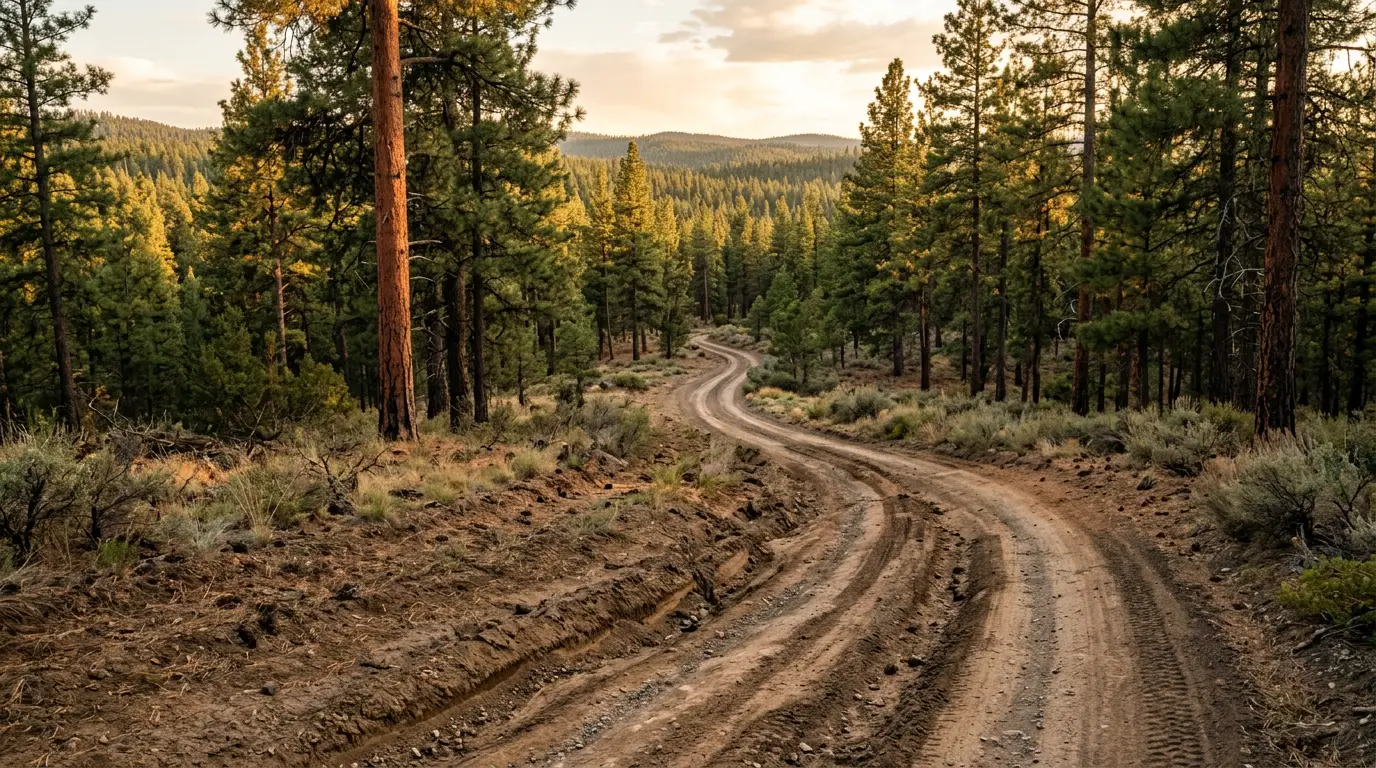
The action line reads "Notice of intent to prepare an environmental impact statement." That is advance notice, not a proposed rule. No regulatory text exists yet, only a description of what USDA intends to propose, a list of alternatives it will study, and a request for comment on both.
The dates confirm each other across two federal systems. The Federal Register lists a close of September 23, 2026. The regulations.gov entry for FS-2026-0100-0001 lists a comment end of 2026-09-24T03:59:59Z, which is four in the morning UTC, one second before midnight Eastern on September 23. Same instant, two clocks. The docket does not accept late comments, and the clock runs on Eastern regardless of where you hunt. The Federal Register's docket check on September 20 showed 124,226 comments in the first twenty-eight days, roughly 4,400 a day.
What travel management actually governs
The Travel Management Rule sits at 36 CFR part 212 in three subparts. Subpart A covers how the agency plans, builds and maintains the forest transportation system, including ingress and egress rights at sections 212.6 and 212.7 and permission to cross National Forest System lands at section 212.8. Subpart B, adopted in 2005, requires every unit to designate which roads, trails and areas are open to public motor vehicle use and prohibits use outside those designations. Subpart C, added in 2015, does the same for over-snow vehicles.
The product a hunter actually holds is the motor vehicle use map. The MVUM shows where a truck, a side-by-side or a dirt bike may legally go, by vehicle class and often by season. The logic today is closed unless designated open. Everything off the map is off limits to motors.
The proposal would flip that default. USDA writes that the amended regulations "would establish a presumption that existing roads, trails, airfields, trailheads, and other access routes and points on NFS lands are open to appropriate public use unless closure or restriction is required by applicable law, valid existing rights, or another governing instrument," or justified in writing on grounds of resource conditions, public safety, conflicts among uses, or maintenance capacity. It would also remove the national minimization criteria that now constrain where motorized routes may be designated.
The agency is explicit that the presumption does not by itself open anything. It "would not itself open a currently closed route, airfield, trailhead, or other access point," and existing designations "would remain in effect until revised under the amended regulations." It is a thumb on the scale for the next decision, not a gate that swings tonight.
Two numbers worth doing yourself
The Forest Service manages 193 million acres across 154 national forests and 20 national grasslands in 43 states, Puerto Rico and the Virgin Islands. Forest Service Chief Tom Schultz puts the road system at "more than 380,000 miles." Divide 193 million by 380,000 and you get about 508 acres of national forest per mile of Forest Service road. Maintenance capacity for that aging grid is itself one of the closure grounds written into the proposed presumption.
The second calculation explains why summer and winter are different arguments. The notice says all but 6 of the 174 forest and grassland units have established MVUMs. That is 168 of 174 units, about 96.6 percent, carrying a summer map. Over-snow vehicle use maps exist on 25 of an estimated 101 units with enough snowfall to warrant winter travel management. That leaves 76 units, about 75 percent of snow country, with no over-snow map at all, eleven years after the 2015 over-snow rule. The promise that existing designations remain in effect carries very different weight in October than in January, because on three quarters of snow-country units there is no winter designation to remain in effect.
The agency's case
USDA frames the rewrite as deregulatory, saying the purpose is "to modernize the Agency's travel-planning process, making it less burdensome, more efficient and timelier," and that applying the full designation process to every map change "may impose burdens disproportionate to the decision."
In the August 21 announcement, Deputy Secretary of Agriculture Stephen A. Vaden, who signed the notice, said: "Public lands are for public use, yet for too long, Forest Service regulations have stood in the way of public recreation access." Under Secretary for Natural Resources and Environment Mike Boren said the current scheme "creates unnecessary barriers for Americans to enjoy the national forests and grasslands that they own."
The motorized advocacy case is sharper. Ben Burr, executive director of the BlueRibbon Coalition, told the Spokane Spokesman-Review that the minimization criteria set an unreachable standard and that litigation over it tends to end in closures. "This was headed to a bad place if you care about access," Burr said. His group also calls MVUMs "frequently out of date, inconsistent between ranger districts," a complaint most hunters who have driven a forest road with a map in their lap will recognize.
The case against
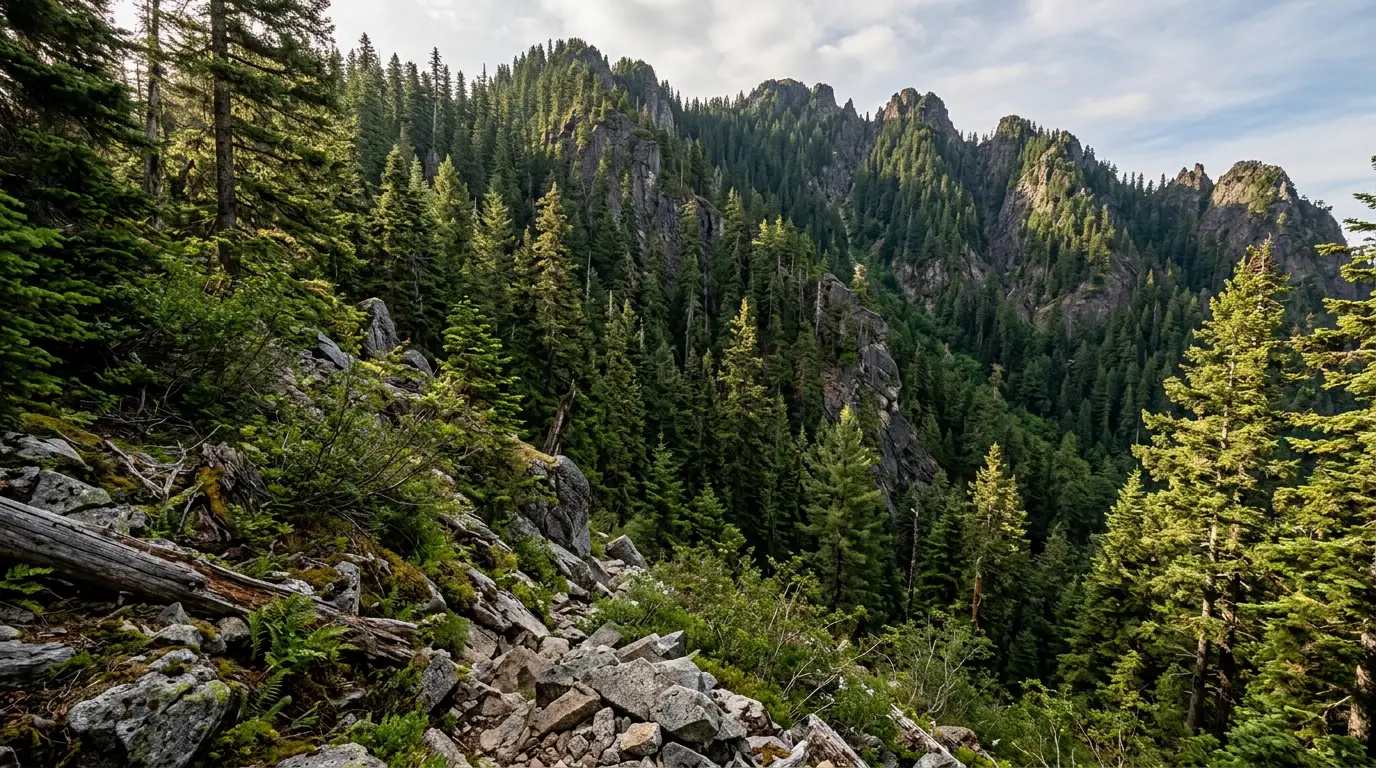
The opposing argument is not that motors are bad. It is that road density decides where elk live in October.
Ryan Callaghan, president and CEO of Backcountry Hunters and Anglers, told Field and Stream that forest-by-forest travel plans "can be contentious, but they work, and they're one of the most important tools we have in the wildlife management tool box." He does not argue for a freeze. "There are certainly areas that are appropriate for expansion in motorized use," he said. "Motorized roads and trail densities directly correlate to where and how long public wildlife stays on public land. So expansion in one area should come with the expectation of providing [wildlife] sanctuary in another. These revisions don't do that."
The Rocky Mountain Elk Foundation, in a September 9 statement, took a middle position, saying wildlife impacts "must be of significant consideration" while decision-making "must lie with individual Forest Service Units," and supporting seasonal road and trail closures during calving, fawning and winter periods.
Brad Smith, interim executive director of the Idaho Conservation League, raised the gap the second calculation above describes. "Any forest that doesn't have a summer or winter travel management plan is now just going to be a free-for-all until they approve one," he told the Spokesman-Review.
What it would change on your ground
For a hunter choosing between a walk-in and a drive-in, three pieces matter.
The first is downed big-game retrieval. The notice says the proposed rule would establish processes and conditions for limited off-route motor vehicle use for "downed big-game retrieval, firewood collection, dispersed camping, and for designating areas for over-snow and other motorized recreation," specifying for each whether it runs through a designation, a written authorization or a categorical exemption. Today, on most units, driving off a designated route to pack out a bull is a violation regardless of circumstance. That is the provision most likely to change a hunter's actual day.
The second is class 1 electric bicycles. The proposal would exempt them from the designation requirement at 36 CFR 212.51(a) and the prohibition at 36 CFR 261.13 on any trail where bicycles are already allowed, though the EIS will also study an alternative keeping them classified as motor vehicles. If you hunt a non-motorized trail system, this decides whether you share it.
The third is the landowner question. Sections 212.6 through 212.8 govern ingress, egress and permission to cross, and section 212.5(b)(1) would replace the minimum-road-system requirement with criteria for an "adequate and appropriate" system. Each unit would also review closed or highly restricted routes annually, subject to appropriations, and flag which might be reconsidered. A route reopened on the far side of your fence changes traffic, trespass pressure and the value of a walk-in lease, and none of that gets decided in Washington.
The notice names one geography outright: the presumption "would include access along section lines in certain national grasslands in North Dakota." Wherever else you hunt, the country is not named, and that is the point. Every substantive decision moves to the unit level.
What happens next
USDA anticipates publishing the proposed rule and draft EIS in spring of 2027, and the final rule and record of decision in early calendar year 2028, a schedule the notice says is subject to change. There will be another comment period on the proposed rule itself.
Comments go through regulations.gov under docket FS-2026-0100, or by letter to the Director, Public Benefits, 201 14th Street SW, Washington, DC 20250. The agency contact is Jim Bacon, Acting Director, Public Benefits, at 707-562-8856. Comments post to the public docket unchanged, including personal information, so do not put your lease location in one. The agency asks for specifics about particular forests and routes rather than general position statements.
Until a final rule exists, nothing about your MVUM has changed. Check your forest's current map before opening day the way you would any year, and take a specific route question to the ranger district, not to a rulemaking notice.
The rewrite that matters is not the one closing this week. It is the one landing in spring 2027 carrying actual regulatory text, and the local decisions that follow it through 2028, one district at a time, on ground you already hunt.
Access is the whole business here. When public-land motorized rules shift, the leased private acre next door changes value in both directions, and hunters who lose a drive-in road start looking for a gate they can count on. HLRBO tracks that demand county by county through Lease Finder, and keeps the reporting that feeds it on the HLRBO blog.