 Written by Justin Park|
Last updated
Press a button on your phone, and Hunterizer tells you exactly what game you can hunt. The new app uses your location and timing—even “Right Now”—to show what’s in season and permitted in real time across the U.S.
Built by two Stanford-trained PhDs, Vlad Powerman and David Boinagrov, Hunterizer simplifies the dense web of hunting regulations into clear guidance. It helps hunters find legal opportunities and avoid accidental violations by consolidating season dates, legal species, weapon types, zone-specific rules, and shooting hours into a single, easy-to-navigate platform.
Launched in September, the app is in its early stages and so far covers seven states, with more on the way. We met up with Powerman at the recent SHOT Show in Las Vegas to get more details and the back story on the app.
Origins of the App
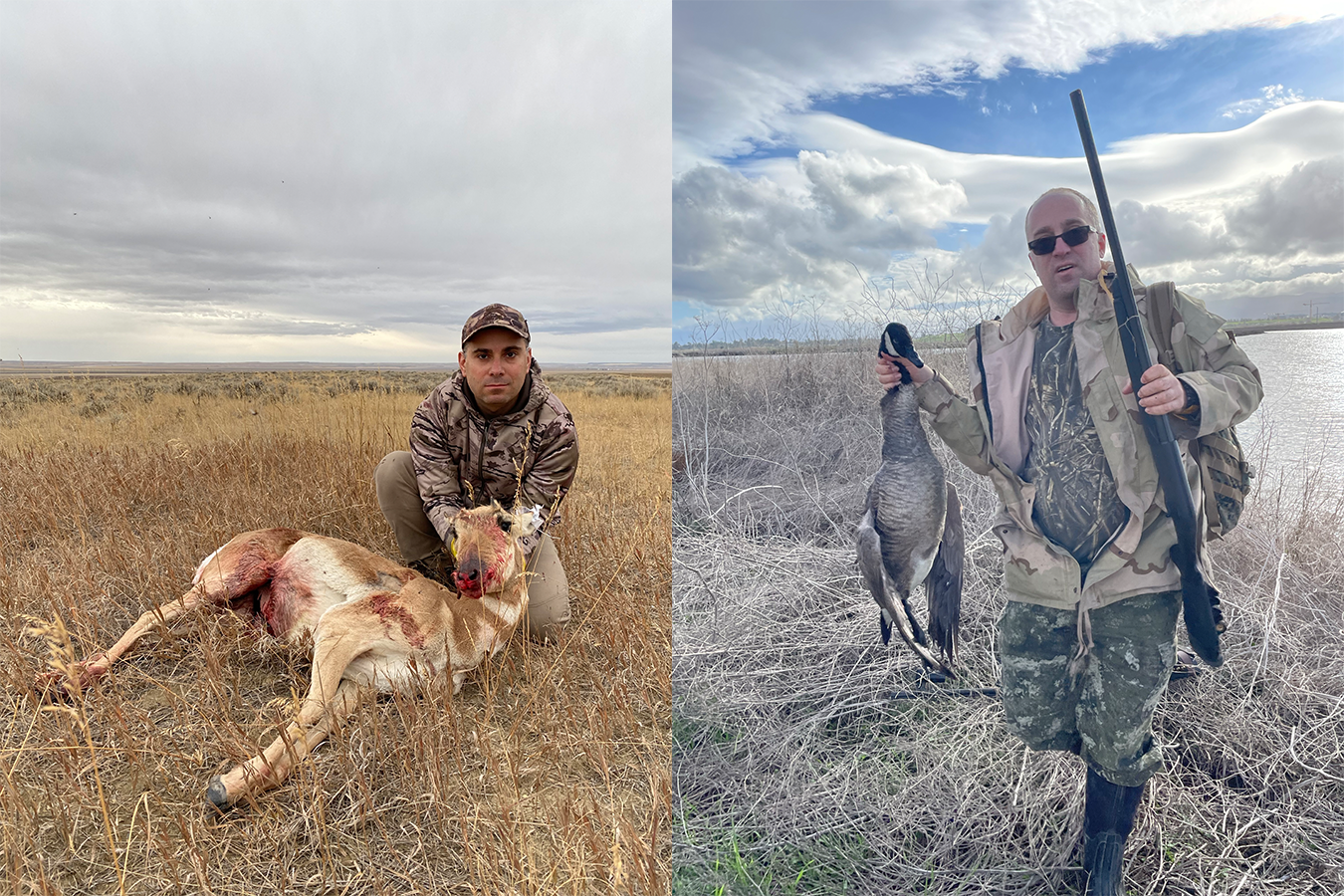
Powerman and Boinagrov came to California from Russia and the Republic of Georgia, respectively, met at Stanford, and have hunted everything from quail to antelope in California and other states in the West often together.
The founders said their experience taking up hunting in their adopted home country pushed them to build Hunterizer.
“We were amazed how complex the regulations are,” Boinagrov said during a recent interview. “Break a law and you can lose your hunting rights, go to jail, or face a big fine. So it’s important to know the regulations, which are often spread throughout information-dense government PDFs.”
In 2024, the two PhDs developed a paper guide in their spare time. Dubbed the California Hunting Atlas, they expanded to additional states with paper map products before bootstrapping the development of the app. Hunterizer launched in September 2025.
The Missing Complement to Mapping Apps
While popular mapping apps such as onX Hunt can tell hunters who owns a parcel of land, Hunterizer focuses on answering a different question: What is legal to hunt, right here, right now?
“All of the current software only helps you answer one question—whether this area is public and who owns it,” Powerman explained. “Then it’s up to you to interpret this information. No one gives you information about what’s allowed to hunt there, what’s in season, or what the rules are.”
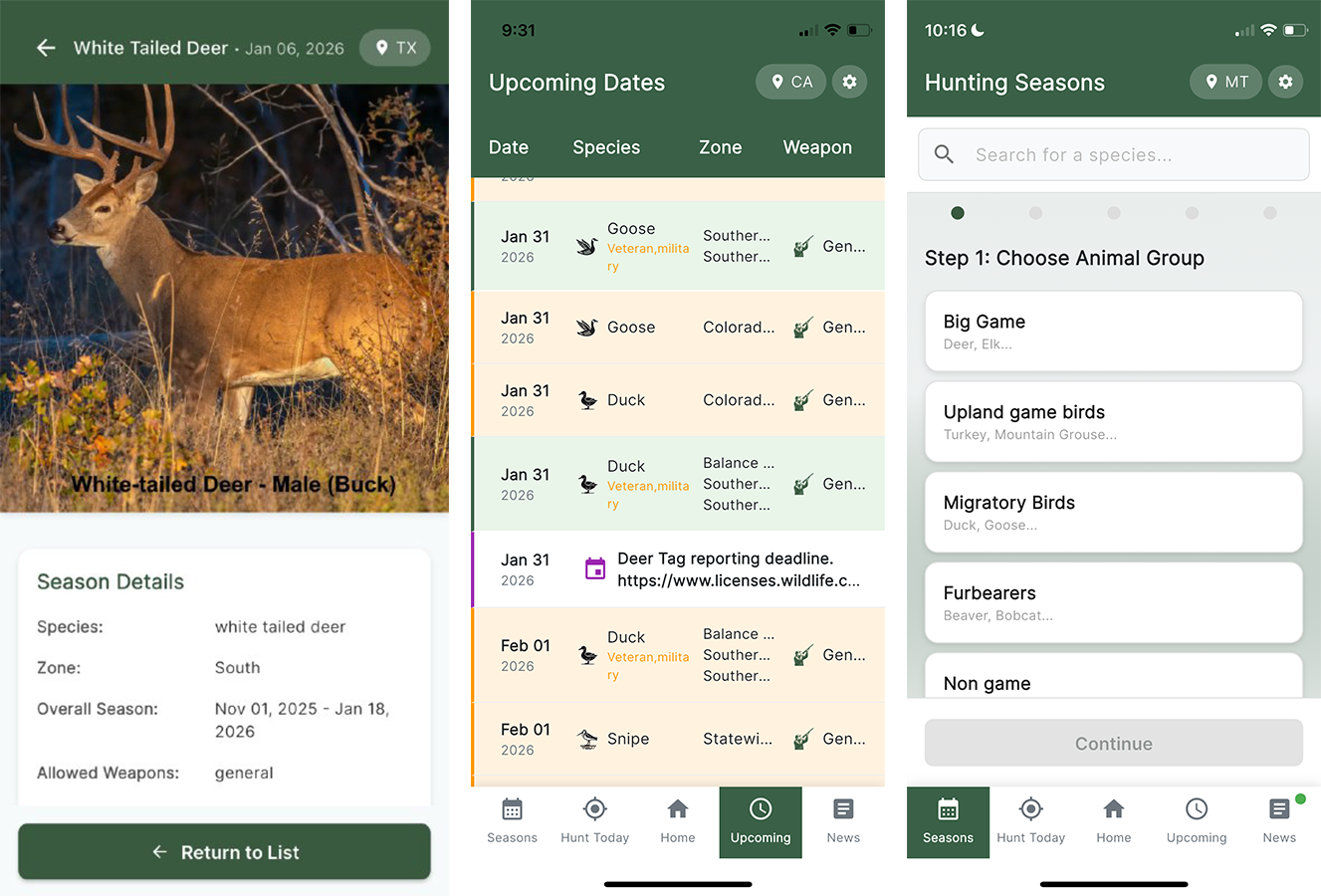
Using location-based data, Hunterizer shows hunters what species are legal on a specific day and in a specific hunting zone. Users can also look ahead by selecting future dates to plan hunts months in advance.
Built by Hunters, Verified by Hand
While you might assume the app is AI-collated, all of Hunterizer’s data is currently entered and verified manually by the founders.
“We tried to do it via AI and it made so many [mistakes],” Boinagrov said. “Right now it’s lots of manual work and verification, but it’s more accurate.”
That attention to detail is intentional. The founders say the app is designed for “good hunters who do not want to break the rules,” especially when regulations can differ greatly by state, species, weapon, zone, or even time of day.
Expanding Nationwide
Hunterizer currently covers seven states — California, Georgia, Montana, New York, Pennsylvania, Texas, and Wisconsin — which they say contain roughly 30 percent of the U.S. hunting population. Michigan, Kansas, and Minnesota are expected to be added soon, with a goal of reaching at least 50 percent coverage by the end of the year.
The app is priced at $14.99 per year or $2.99 per month, with a single subscription for all available states.
Upcoming feature additions include offline access for areas without cell service, interactive maps showing hunting zones, and tools to help hunters prepare for big-game draw applications. The company is also in discussions with state wildlife agencies about data sharing and potential partnerships.
“OnX tells you who owns the property,” Powerman said. “We give you information about what’s huntable there. Having both opens up new opportunities and makes you a better hunter.”
Justin Park is a Colorado-based writer, editor, and avid hunter with a passion for the outdoors. He contributes to leading publications such as GearJunkie, Popular Mechanics, Powder, and Men's Journal, and serves as Editor of Wild Snow. Park is deeply involved in conservation and recreation advocacy, serving as Chapter Chair of the Rocky Mountain Elk Foundation (RMEF) in Summit County. He also represents RMEF on a state recreation committee focused on proactively addressing land use conflicts.