 Written by HLRBO Staff|
Last updated
The hunting order signed September 17 gives four secretaries until March 16, 2027 to propose opening landlocked federal ground, and that single clause is the part of it most likely to reach a private landowner. Lead ammunition took the headlines. The access language took one sentence.
Read the clause, not the summary
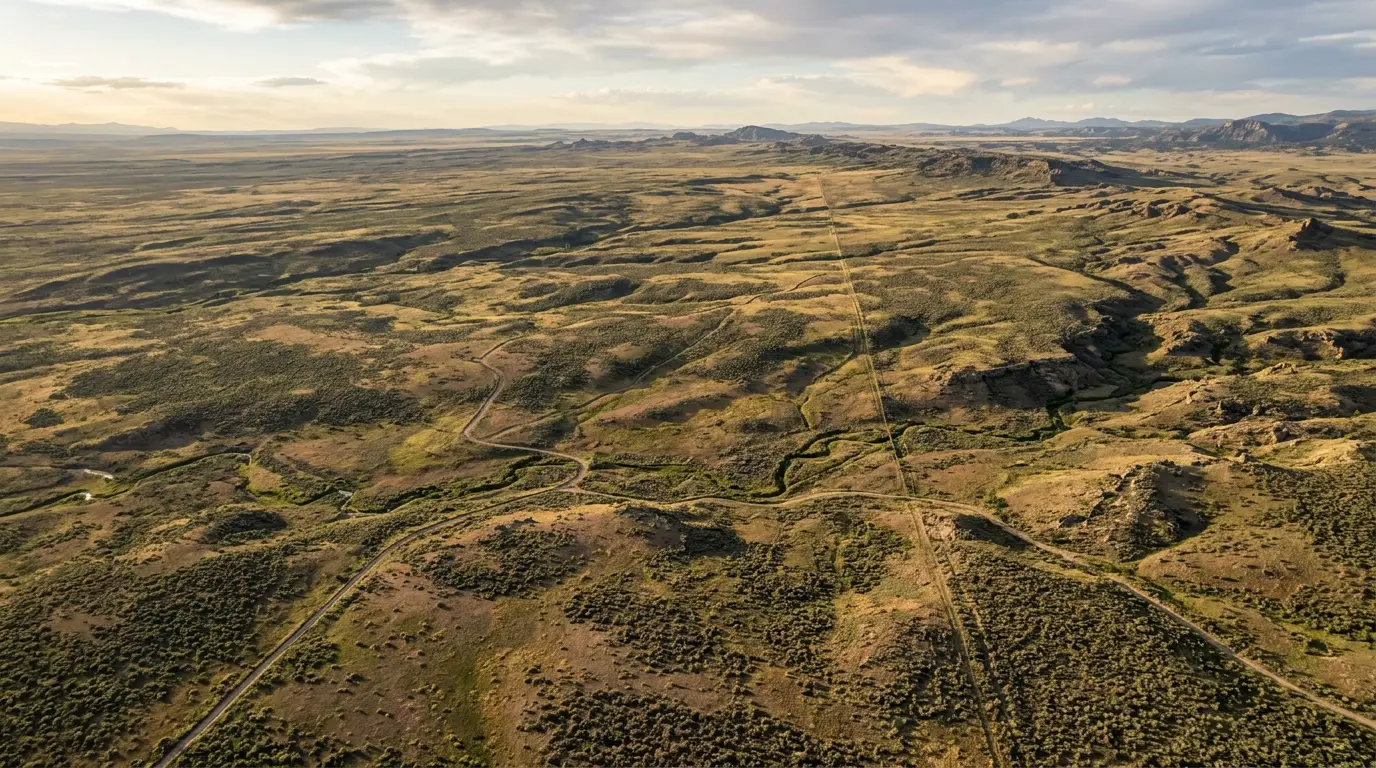
President Trump signed Reinvigorating America's Hunting Heritage on September 17, 2026. The private-land mechanism sits at section 2(b)(iii), inside a list of things the Secretary of War, the Secretary of the Interior, the Secretary of Agriculture and the Secretary of Commerce must propose within 180 days. The operative language directs them to "improve public access to difficult-to-access Federal lands and waters by prioritizing practical access opportunities, including voluntary access easements, land exchanges, cooperative agreements with States and local governments, and other tools that respect private property rights."
Notice what that sentence does not say. It never uses the word "landlocked," and it never uses "checkerboard." The White House fact sheet issued the same day does, describing the order as directing the four secretaries "to unlock checkerboarded and landlocked parcels through voluntary access easements, land exchanges, and cooperative agreements that respect private property rights." That is the administration's gloss. The order's own phrase is "difficult-to-access," which is broader and softer, and the difference between those two words is the kind of thing that gets litigated later.
There is a second private-land provision, and it is easy to miss. Section 4(e) tells three of those four, the Secretary of War, the Secretary of the Interior and the Secretary of Agriculture, to coordinate with state agencies to promote game populations through "voluntary agreements with private landowners and agricultural producers." The Secretary of Commerce is not named in section 4. Section 4 also carries no deadline at all. Not 60 days, not 180, not 365. It is a standing instruction with no clock on it.
The calendar, and where it lands in the 2027 season
The order dates itself, so the deadlines are arithmetic. Counting forward from September 17, 2026, the 60-day item lands on November 16, 2026, which is the Agriculture Secretary's review of Forest Service river access lotteries under section 2(c). The 90-day items land on December 16, 2026, covering both hunting at Castle Mountains and Craters of the Moon under section 2(a) and the migratory game bird authorization proposal under section 2(d). The 180-day item, section 2(b) and the access clause inside it, lands on March 16, 2027. The 365-day item, encouraging states to expand Sunday hunting under section 2(e), lands on September 17, 2027.
Now put those dates against next season. South Carolina fixes its antlered deer opener by statute rather than by agency calendar, and S.C. Code 50-11-310(A)(3) sets Game Zone 3 at "August 15 through January 1, with archery equipment and firearms." Count from March 16, 2027 to August 15, 2027 and you get 152 days. Kentucky sets its opener by formula instead, and 301 KAR 2:172 provides that a hunter "may use archery equipment to hunt deer statewide from the first Saturday in September through the third Monday in January," which in 2027 is September 4. That is 172 days after the access proposal is due.
The Sunday hunting deadline is the one that reads strangest on a calendar. September 17, 2027 falls 33 days after South Carolina's August 15 opener, and August 15, 2027 is itself a Sunday. A directive aimed at expanding Sunday hunting comes due more than a month after one state's season has already opened on a Sunday.
Those gaps are also smaller than they look, because section 2(b) requires the secretaries to "propose modifications to policies or regulations." A proposal is not a rule. Whatever lands on March 16, 2027 still has to move through whatever process each agency uses, and 152 days is not a long runway for that. Treat the 2027 openers as the earliest plausible test, not as a promised date.
What a landlocked parcel is, in acres
The most careful count of the problem is the 2018 report Off Limits, But Within Reach, produced by onX and the Theodore Roosevelt Conservation Partnership. It found that "the American people are currently locked out of 9.52 million acres" of federal public land across thirteen western states. The definition is narrow and worth quoting, because it decides the number: landlocked lands are "federally managed lands that cannot be accessed directly from a public road (direct access) and cannot be accessed via adjoining public land by way of a public road (indirect access)."
The distribution is lopsided. By agency, 93.2 percent of those acres are Bureau of Land Management ground, with the Forest Service at 4 percent and everything else in the remainder. By state, Wyoming holds 3.05 million landlocked acres, Nevada 2.05 million and Montana 1.52 million, against 121 thousand in Washington. TRCP's broader tally, covering federal, state and local land across 22 states, is 16.43 million acres.
The report is candid about its own limits. It counted only permanent legal access, and it says plainly that "it is reasonable to assume that a nominal percentage of these lands do, in fact, have legally-binding easements on unmaintained two-track routes across private land." Wherever you own, the western acreage is evidence of a pattern, not a description of your county, and your state's landlocked inventory may not have been mapped at all.
Why the fix runs through the neighbor
A landlocked parcel is landlocked because the only way in crosses deeded private ground, which is why section 2(b)(iii) reaches for the tools it does. An easement is a recorded, durable right of passage that survives a sale, which is exactly what makes it valuable to an agency and exactly what makes it a real decision for a landowner. You are not granting permission for a season. You are encumbering the deed.
What it asks is specific. You give up the ability to revoke. You take on traffic across a defined corridor, and you take on questions about maintenance, gates, signage and liability that the easement document either answers or does not. If you currently lease your hunting rights, you are also changing the product, because an exclusive lease bounded by a public access corridor is not the same thing you sold last year. None of that is an argument against signing. It is an argument for reading the instrument.
The federal government already runs a version of this. The Voluntary Public Access and Habitat Incentive Program, described in an NRCS fact sheet dated July 2019, works indirectly: "Only States and tribal governments are eligible to apply for VPA-HIP grants," and those agencies "then provide funding to participating private landowners through new or expanded public access programs." The landowner's counterparty is a state wildlife agency, not Washington. The order does not change that structure, and it does not name a funding source for the easements it wants.
There is also a route that asks nothing of the landowner. In Iron Bar Holdings, LLC v. Cape, decided March 18, 2025, the Tenth Circuit held that the Unlawful Inclosures Act of 1885 preempts Wyoming trespass law as applied to corner crossing on foot without touching private soil. That decision governs the Tenth Circuit only, and it reaches checkerboard corners rather than fully enclosed parcels.
What the groups actually said
Ryan Callaghan, president and chief executive officer of Backcountry Hunters and Anglers, gave Outdoor Life a measured read on the night it was signed. "I would applaud it for what it is," Callaghan said. "It's a clear nudge or go ahead for the agencies and departments to put an emphasis on these things, which are largely all positive." He also pointed at the deadlines as the substance, noting that they are "where we're going to see the actual details." That is the whole of what he is on record saying here, and the precision matters, because organizational statements from conservation groups circulate widely without a speaker attached.
The sharpest dissent in the same Outdoor Life report, by Christine Peterson, came from Land Tawney, co-chairman of American Hunters and Anglers, who allowed that the access portion "is substantive and welcomed," then said the rest "is common sense and doesn't amount to much." His broader objection was about capacity. "Starting with the dismantling of the agencies in charge of public lands through DOGE, proposed budgets that drastically cut management agencies, and an energy abundance agenda that puts billionaires before the people, the attacks [on the hunting community by this administration] have been sustained and numerous," Tawney said. Even allowing for the parts of the order he welcomed, his verdict was that "by no shape or form does it bring them out of the doghouse." Callaghan raised a version of the same point from the other direction, telling Peterson he wants more funding and staffing for the agencies now carrying these assignments.
What the order cannot do
Section 6(c) states that the order "is not intended to, and does not, create any right or benefit, substantive or procedural, enforceable at law or in equity by any party," and section 6(b) conditions the whole thing on "the availability of appropriations." No landowner can sue to make an easement happen, and no hunter can sue to open a parcel. What exists is an instruction to four departments and a set of dates.
Nothing here is a regulation yet, and nothing binds a state. Seasons and access rules remain the province of your state fish and wildlife agency and, on a leased tract, of your lease. Confirm both before you plan around any of it.
The quietest line in an executive order is not always the weakest one. Section 2(b)(iii) does not open a single acre by itself, but it tells four departments to go find the landowners whose ground is the gate, and it gives them until March 16 to say how. If you own one of those gates, the first letter may arrive before the paperwork does. For landowners weighing what access is worth on their own ground, HLRBO's guide to leasing your land covers the lease side of that same question.