 Written by HLRBO Staff|
Last updated
North Carolina wildlife officials have added a special early antlered-deer season, earlier firearms dates, and extra harvest tags across seven counties for the 2026-2027 season, all aimed at slowing chronic wasting disease. It is a local rewrite of the deer calendar, and it looks a lot like what hunters in a growing number of states are seeing.
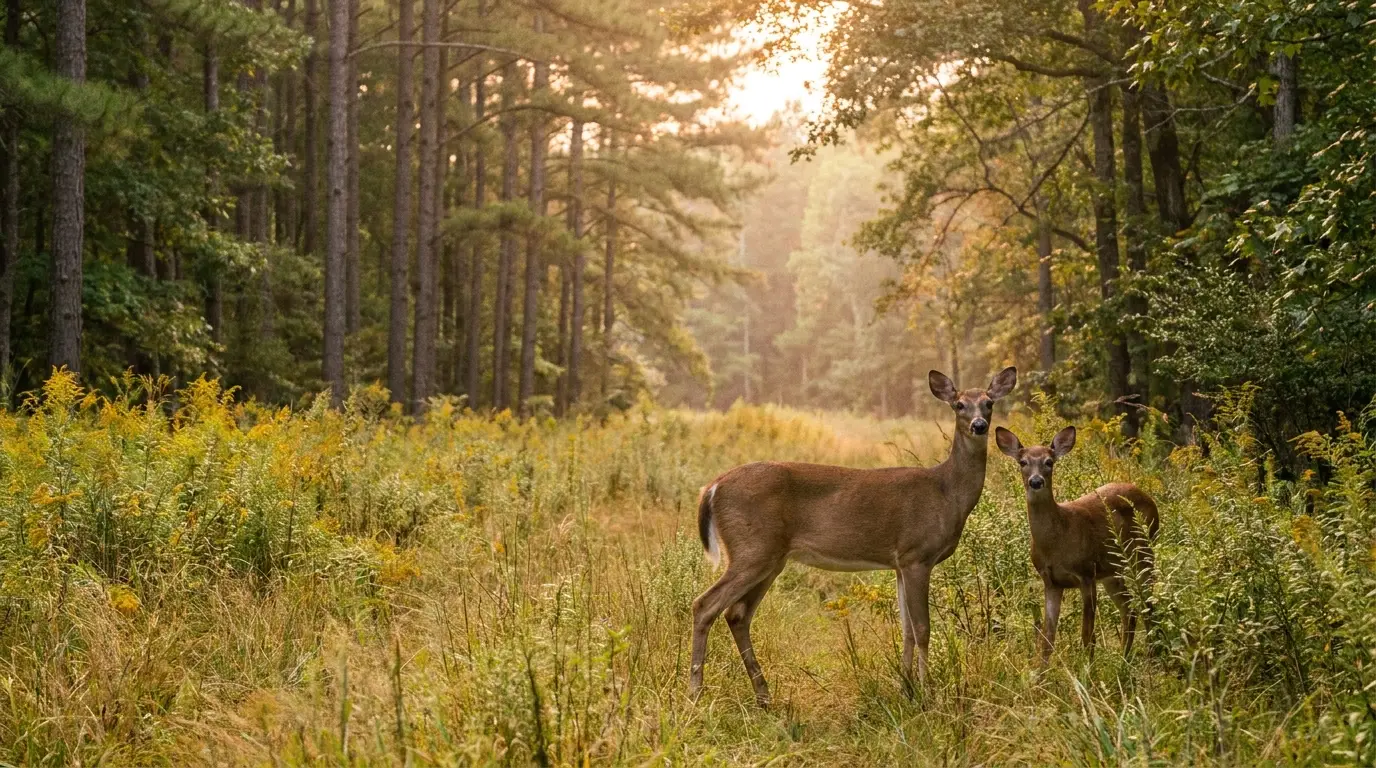
The North Carolina Wildlife Resources Commission has designated Cumberland, Forsyth, Sampson, Stokes, Surry, Wilkes, and Yadkin counties as CWD Management Areas after infected deer turned up in each. The response is more hunting, not less.
The headline change is a Special Early Season for antlered deer on Aug. 22-23, 2026, open in all seven management areas using any lawful weapon. In the Northwestern CWD Management Area, which covers Forsyth, Stokes, Surry, Wilkes, and Yadkin counties, blackpowder season now opens Oct. 31 and gun season Nov. 14, each a week earlier than the usual schedule. Baiting stays prohibited in all seven management areas before Sept. 1.
There is also a new tag program. Starting July 1, landowners and hunters with exclusive hunting rights on property inside a CWD Management or Surveillance Area, or within 10 miles of a confirmed detection, can apply through the CWD Management Assistance Program for additional harvest tags, with the number of tags scaled to enrolled acreage.
Carcass handling changed statewide too. North Carolina dropped its in-state transportation restrictions on harvested deer, but non-edible carcass parts now have to be buried at least three feet deep and 300 feet from water, lawfully left on the ground in the county of harvest, or sent to a lined landfill.
One state, a national pattern
Chronic wasting disease is a fatal, contagious neurological illness in deer, elk, and moose, with no cure and no vaccine. Wildlife agencies manage it mainly by thinning deer density in affected zones and tracking where the disease spreads, which is why the regulatory playbook keeps landing on the same tools: earlier seasons, longer seasons, more antlerless opportunity, incentive tags, and tighter carcass rules.
North Carolina is not an outlier. As of the U.S. Geological Survey's June 2026 update, CWD has been detected in 37 states in free-ranging or captive cervids. Arkansas is expanding its own footprint, adding Grant and Sevier counties to its CWD Management Zone as of July 1, 2026, with transport rules that follow harvested deer across county lines.
The practical takeaway for a hunter anywhere: if CWD reaches your area, expect your season dates, your tag options, and how you can move a carcass to change, often in the direction of more days afield and more deer on the ground. It pays to read your state agency's regulations every year rather than assuming last season's calendar still holds.
Wherever your state lands, you are not stuck with the same ground. HLRBO connects you with landowners across the country to unlock new private-land access. Find a lease or subscribe to become an HLRBO member here.