 Written by HLRBO Staff|
Last updated
Squirrel season opens August 15, 2026 in Kentucky, August 22 in Tennessee, and has been open in Missouri since May. Georgia's opener is a fixed August 15, though the state has not posted a dated 2026-27 squirrel chart yet. Either way it is the first real opener on the American hunting calendar, the cheapest way anyone has ever learned to hunt, and it gets none of the ceremony.
The word opener belongs to deer, and everyone knows it. Countdown posts, trail camera reveals, a small industry devoted to the second week of November. Squirrel season arrives in the heat, leaves still on, and gets a paragraph in the back of the regulations guide.
That is a strange way to treat the only season most people could actually start with.
Five Openers, and None of Them Are in November
Missouri went first, as it does. The Missouri Department of Conservation lists its 2026-2027 season on eastern gray and fox squirrels as May 23, 2026 through February 15, 2027, daily limit 10, possession limit 20.
Kentucky opens August 15, 2026, the third Saturday in August, in two pieces: August 15 through November 13, then November 16 through February 28, 2027, daily limit six, possession 12. Tennessee opens August 22, 2026 and runs to March 15, 2027, daily bag 10, plus a separate spring season, May 8 through June 13 in 2027.
West Virginia opens latest, September 12, 2026 through February 28, 2027, daily bag six, possession 24. It also does something worth copying: a youth-only squirrel weekend on September 5 and 6, one week ahead of everyone else.
Georgia's opener is a fixed calendar date, August 15. Its 2026-2027 regulations guide is published, but the most recent dated squirrel announcement covers 2025-26, when the season ran to February 28 with a daily limit of 12. Treat the structure as durable and confirm the year.
Count the days and the spread is the real story. Missouri's season runs 269 days. West Virginia's runs 170. That is a 99-day gap in the same country for the same animal, and 112 days separate the two opening mornings. Four of the five are Saturday by rule, which is not luck. It is a scheduling decision by people who know a new hunter needs somebody with a free day to take them. Georgia is the exception that proves the point in reverse: its August 15 is a fixed calendar date, and it lands on a Saturday in 2026 by coincidence.
Kentucky's calendar says the rest out loud. The season closes November 13 and reopens November 16, stepping out of the way for the modern gun deer opener. Squirrel gets the whole fall except the three days that belong to deer. Wherever you hunt, the dates that govern are your state wildlife agency's, and several of these states publish them as formulas rather than fixed dates, so the arithmetic moves every year.
The Cheapest Classroom in the Woods
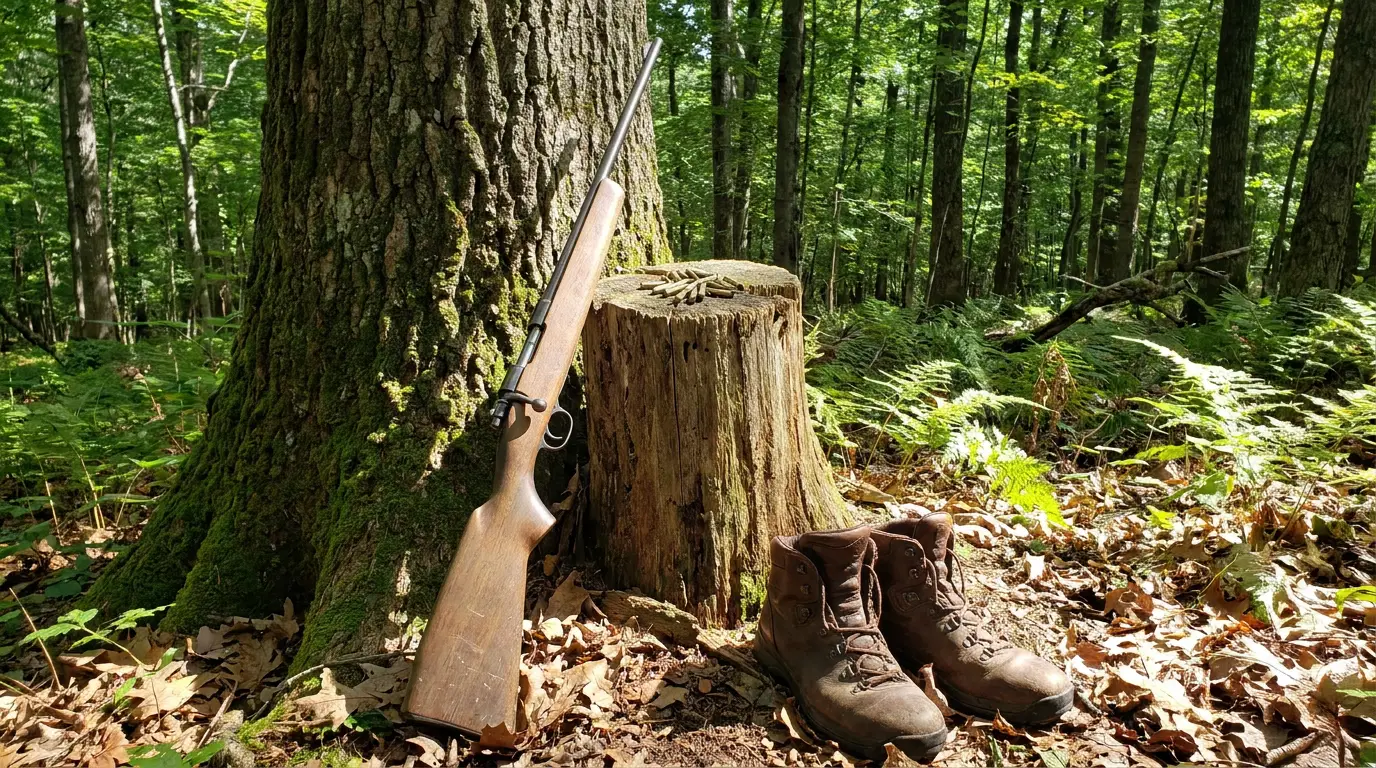
"There's no better entry point into the world of hunting than squirrel season," said Diana McGrath, a wildlife biologist with the Georgia Wildlife Resources Division's Game Management Section, in the agency's announcement of the opener. "It's often a more accessible option and is filled with tradition, woodsmanship, and the art of patience." In an earlier release she made the practical version: "When you are squirrel hunting, it isn't necessary to be absolutely still or quiet, making it an ideal first hunt opportunity for young or new hunters."
That is the pedagogical case. Deer hunting punishes a beginner for every mistake and gives no feedback for six hours. Squirrel hunting forgives the fidgeting and tells you inside twenty minutes whether you picked the right tree.
The gear list is short enough to be a rounding error. West Virginia's beginner guide asks for a shotgun when the leaves are thick or a .22 when they thin out, neutral clothes, sturdy boots, and 400 square inches of blaze orange. No stand, no blind, no cellular camera, no food plot, no lease deposit.
What a beginner gets in exchange is repetition, which is the thing hunting is worst at supplying. A Kentucky license buys 196 days and a daily limit of six. A deer tag buys one animal.
The Same Acorns Everyone Else Is Counting
Here is the part for deer hunters who think small game is beneath them.
West Virginia's Division of Natural Resources runs an annual mast survey with the Division of Forestry, covering 18 species of trees and shrubs, led by Avery Korns, the mast survey project leader in the agency's Wildlife Resources Section. One dataset, released September 23 last year, produced both forecasts at once. Squirrel, turkey, wild boar and grouse harvests were projected to hold steady. Deer and raccoon were projected to fall, and the reason given was mast production changing how animals move.
Same acorns. Same hickories. Two species, one spreadsheet.
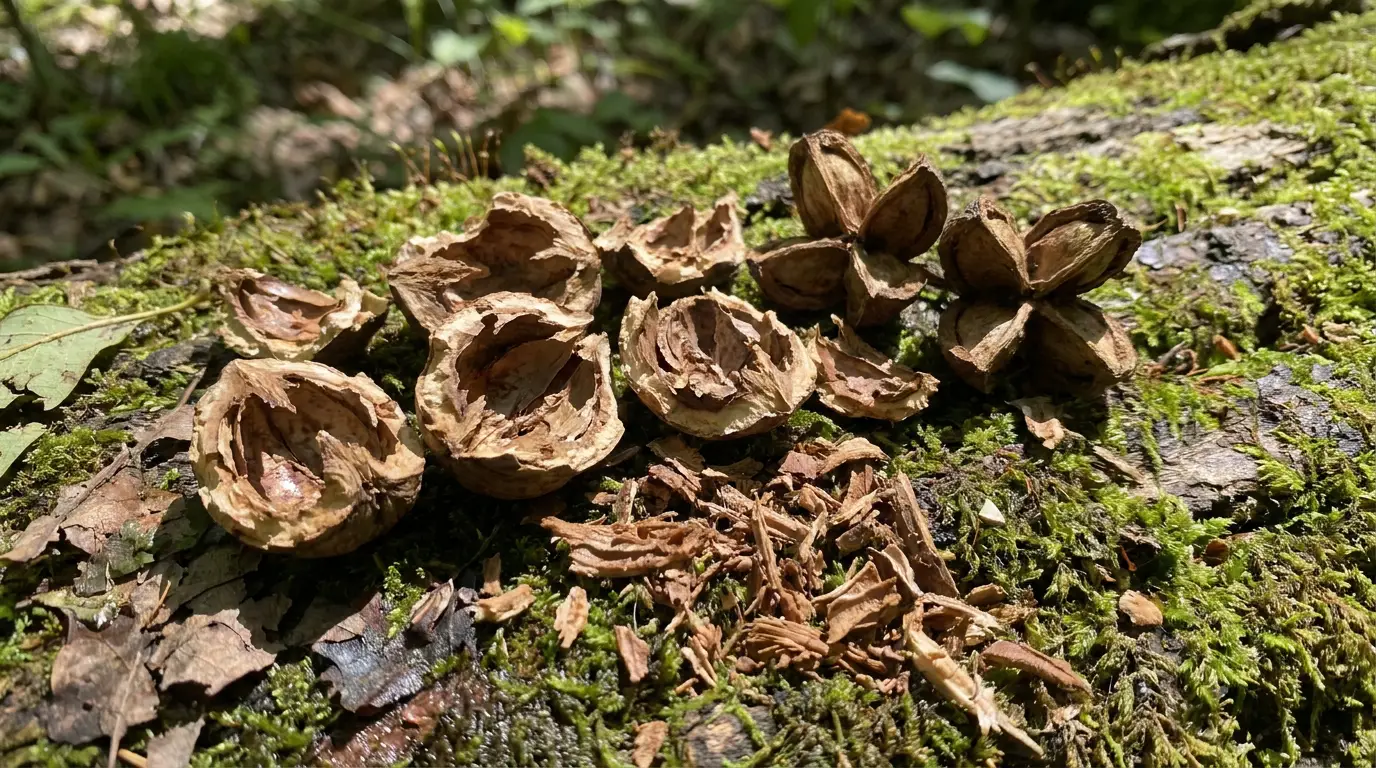
So the skills transfer without translation. Early season the food is hickory, found by ear and by the litter of cut shells underneath. Later, when the leaves drop, it is oak, and you are reading the same white oak flat that will hold deer in October. Whoever spends August finding cuttings has spent August finding acorns, in woods still open enough to walk.
Who Is Actually Walking In
The U.S. Fish and Wildlife Service published an addendum to the 2022 National Survey of Fishing, Hunting, and Wildlife-Associated Recreation on September 27, 2024, covering recruitment, retention and reactivation. It counted 14.4 million hunters aged 16 and older in 2022. The line worth reading twice: "While females comprise 17 percent of all active hunters, they represent 33 percent of entrants."
Women are entering at nearly twice their share of the people already there. Run 17 percent against 14.4 million and the existing base is roughly 2.4 million women. The entrant share is where that base could change, if the entrants stay.
That last condition is the Service's own caveat, and it is worth quoting whole. "This could suggest that of late, females are initiated into hunting and fishing more than they have been historically. Alternatively, it could suggest that women are more likely to give up the pursuits after they have entered the community," said Jerry Leonard, an economist with the Service's Office of Conservation Investment. Those two readings point in opposite directions, and a single cross-section of entrants and actives cannot say which one is doing the work.
Now the honest objection, because it is a good one. Nothing in that addendum says squirrel hunting produced a single one of those entrants. The survey counts who entered, not what they entered through. The gateway-species argument is inherited wisdom, and inherited wisdom is how plenty of bad conservation policy got made. Anyone who wants to argue that new hunters are arriving instead through public-land deer, a mentored turkey hunt, or a wild-game dinner is working from the same absence of evidence and deserves the same benefit of the doubt.
What survives the objection is arithmetic rather than tradition. A season that opens 90 days early, costs almost nothing to equip, tolerates noise, and offers a daily limit instead of a single tag is better suited to a beginner than anything else on the calendar, whether or not it explains the 33 percent.
What a Landowner Gets in August
For anyone with ground, this is a calendar problem first. August squirrel access sells a window that is otherwise dead. Nobody is deer hunting in August. The stands are hung, the cameras are out, and the property earns nothing until archery opens. A small-game hunter walking hardwoods in the heat is about the lowest-impact use of that ground there is, and the money arrives before deer season rather than after.
Every deer lessee will raise the counter-argument, and it is a fair one: a stranger on the property in August is exactly the pressure a deer lease is meant to buy out. That is not paranoia. It is the right instinct, and it is why the fix is contractual rather than conversational.
Write it down. Which tracts are open, so squirrel hunters stay in the hardwoods and out of bedding cover. Whether access ends when archery begins. Whether the small-game hunter and the deer lessee are one party or two, and if two, whether they know it. A landowner who has answered those three questions is selling a separate product on the same acres. One who has not is selling a conflict.
The rest is listing it as what it is: its own category, priced like an August product rather than a discounted November one, for the least served group in the market. People who do not own a stand, have never held a tag, and would like to learn something on a Saturday.
Watch August 15. Kentucky opens that morning and Georgia's fixed date falls on it, both on a Saturday in 2026, both roughly ninety days ahead of the opener everyone is actually counting down to. It is the longest head start in hunting, and nobody has claimed it.
HLRBO connects hunters with landowners across the country, with verified listings, real lease agreements, and secure payments behind every booking. Find a lease or subscribe to become an HLRBO member.