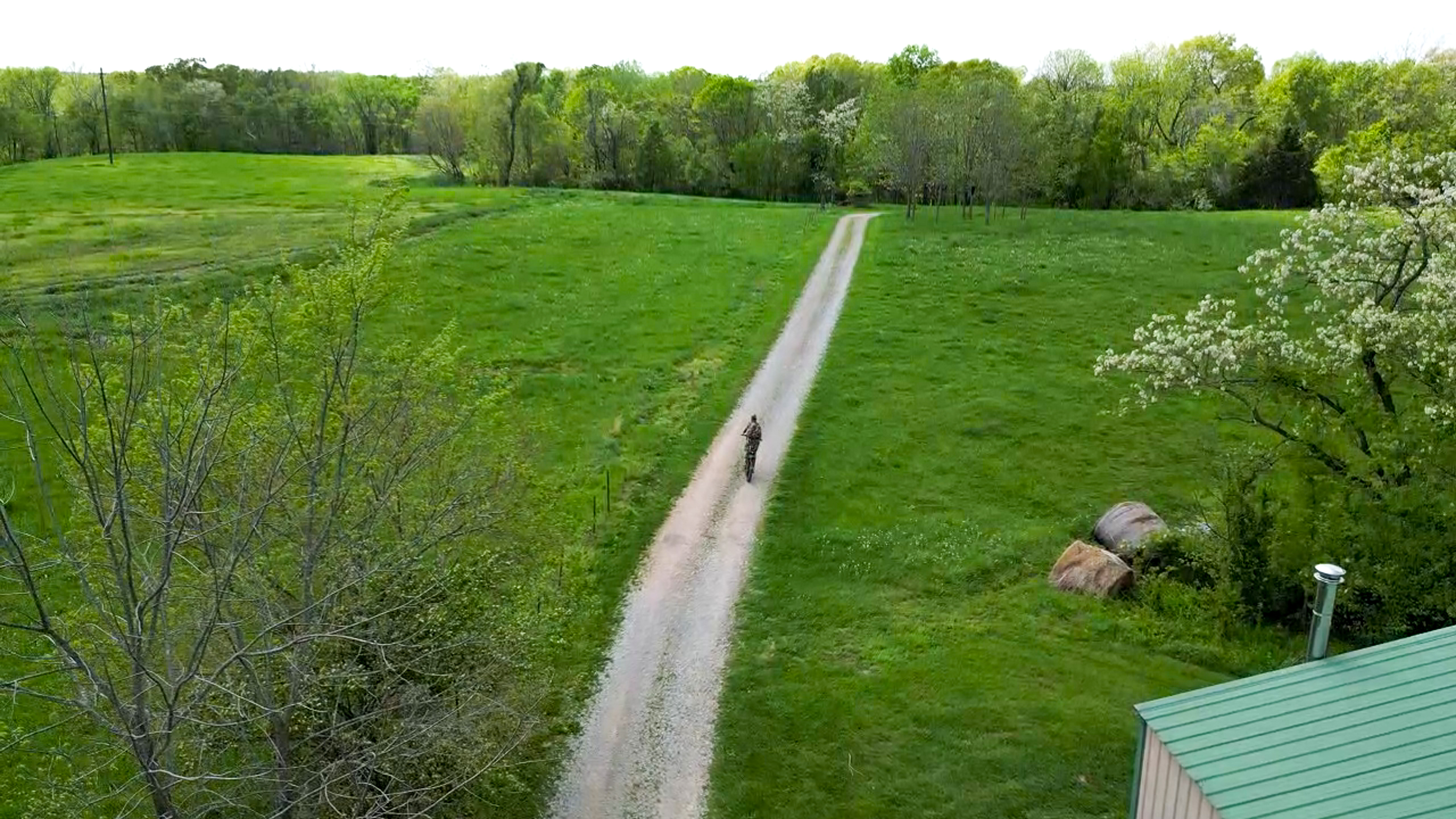
The Quiet Approach
Armstrong says she uses her e-bike primarily to navigate wooded hunting areas and trail systems where stealth matters. Compared with a gas-powered truck or UTV, the small battery-powered motor makes only a faint hum.
“It’s the quietest option other than walking,” she explains. “It bumps deer less when seen or heard and seems less threatening to them.”
That quiet approach can make a difference during sensitive parts of the season, when animals are wary and small disturbances can push them deeper into cover. Hunters often talk about “access strategy,” meaning how they enter and leave hunting spots without disrupting wildlife. For many, e-bikes are becoming a key part of that strategy.
Another advantage, Armstrong notes, is scent control. Riding instead of hiking can reduce sweat and ground scent left along a trail, which are both factors that can alert animals.
Speed-Calling for Turkey Season
While many people associate hunting transportation with deer season, Armstrong says she actually logs the most miles on her e-bike during the spring turkey season.
“I put the most miles on my e-bike when I’m trying to locate a tom by calling,” she says. “The e-bike helps me quietly slip through the woods and stop and call every 100 yards to try to locate a bird.”
With turkey hunting, locating a gobbler often requires moving across large areas while making calls to trigger a response. Walking every stretch of that ground can take hours and drain your energy before the hunt even begins.
The e-bike, Armstrong says, changes that dynamic.
“It saves me an immense amount of time and energy, eliminating walking altogether until I locate a bird and the hunt truly begins.”
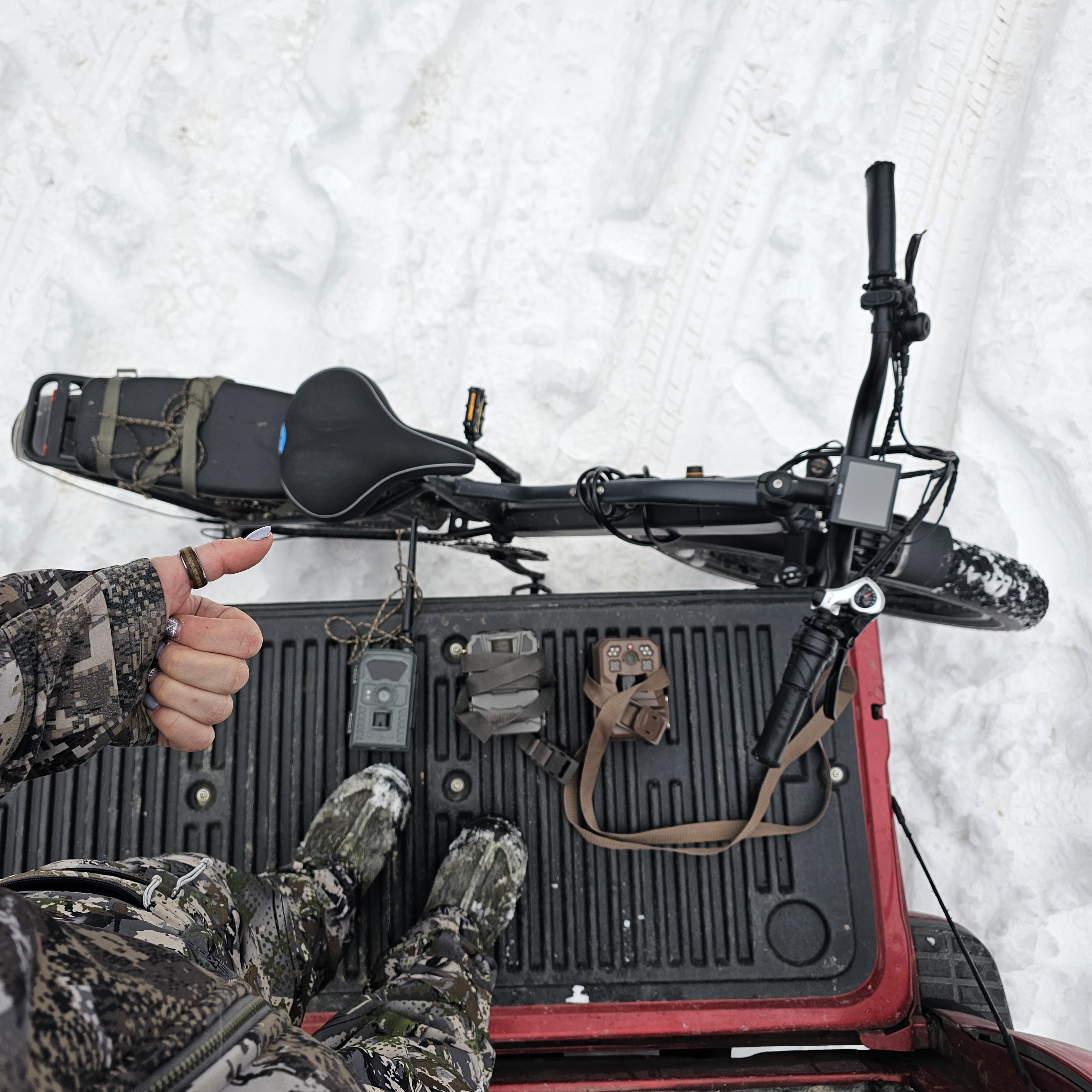
Gear Hauling and Scouting
Beyond simply traveling, electric bikes are also being used as gear haulers in the field. Many models are equipped with racks or small trailers designed to carry equipment or supplies.
“I’ve used the e-bike to put out bait,” she explains. “It can handle two bags of corn as long as there are no hills.”
That caveat highlights one of the realities of hunting with an e-bike: while capable, they still have limits compared to larger vehicles. There are hunt-specific e-bike setups such as the Backou Mule Jager, which have additional torque and battery life to handle long, grueling entries. But these more powerful options are usually $5,000 up to more than $10,000, approaching the cost of a used UTV or a truck.
Still, the ability to cover a lot of ground quickly is a major benefit not only for hunting actively, but for preseason scouting. Hunters often spend significant time checking trail cameras, evaluating terrain, and planning stand locations. Doing that on foot can take an entire day; doing it on an e-bike can turn it into an afternoon ride.
“It’s a great way to scout a property,” Armstrong says, “and cover distance without exhausting yourself.”
Pros and Cons of E-Bikes for Hunting
As with any piece of gear, e-bikes come with both strengths and drawbacks.
There are several clear advantages:
- Quiet travel that disturbs wildlife less than motorized vehicles
- The ability to cover long distances faster
- Reduced ground scent and physical fatigue when accessing hunting spots
But e-bikes aren’t a great fit for every hunt as they require reasonably smooth trails or roads and a decent level of fitness.
“Most e-bikes have limited power for hauling gear, additional weight, and steeper terrain,” she says. While pedal assist helps riders accelerate and climb and many bikes have a push-button throttle option, the convenience still relies largely on the rider’s own physical effort and skill.
“Using an e-bike does require more skill and balance,” she says. “I have fallen off a few times and have to be careful reading the terrain while riding to watch out for potentially slippery spots or branches that might get stuck in the wheels.”
In rugged off-trail terrain or steep hills, that limitation can force you to leave the bike, which means you have to return to it later no matter where the hunt takes you. If you go further than your battery has power for, an unpowered e-bike is heavy and extremely difficult to ride—especially uphill— to get you back out again.
“If you run out of battery, you can pedal the e-bike as a normal bicycle,” Armstrong explains. “However, it is very heavy and more difficult to pedal than a bicycle, even on flat surfaces.”
What to Look for in a Hunting E-Bike
For hunters considering buying an e-bike, Armstrong says the first step is thinking about how the bike will be used.
“Know what you are going to be utilizing the e-bike for,” she advises.
Terrain plays a major role in choosing the right model. Hunters who operate in mountainous areas or regularly haul equipment may need more powerful motors or bikes designed for heavier loads.
“If the terrain features where you hunt have frequent elevation changes, or you plan on riding with a cart for hauling more than 50 pounds,” Armstrong says, “choosing an e-bike with higher power capabilities would be more beneficial.”
Other factors hunters often consider include battery range, tire size for rough ground, and frame strength for carrying gear.
If you're considering picking up an e-bike for hunting, there are more choices than ever which can be intimidating if you're not versed in all the specs and options. This excellent guide reviews several bikes built specifically for hunting and is a great place to start your search.