 Written by HLRBO Staff|
Last updated
A University of Nebraska–Lincoln report offers a rare, statewide look at the hunting lease market, an area of rural economics that is seldom measured in academic research.
Published as part of the Nebraska Farm Real Estate Market Survey, the report stands out for how it treats hunting-related income. While universities such as Texas A&M and the University of Missouri do report on hunting leases, Nebraska integrates the revenue into its official land-value survey, treating recreational access as a core economic metric.
The Nebraska findings offer insight into trends shaping the national market. They show hunting leases play an increasingly available and meaningful role in landowner income, particularly in states with limited public hunting land.
In Nebraska, nearly half of all leases are for deer or antelope, which account for 49 percent of the market. Waterfowl leases make up 19 percent, with pheasant, quail, and turkey comprising most of the remainder.
The report identifies what drives lease value. Vegetative cover ranked as the most important factor, followed by access to water and topography. Properties with diverse habitat consistently command higher lease values.
Demand varies by geography. Waterfowl leases are most common in the northwest, central, and east districts, while pheasant and quail leases are concentrated in the south. Turkey hunting rights show strong demand in other parts of the state.
Revenue & Resources
Despite demand, most hunting leases generate modest income in Nebraska. About 62 percent earn $2,499 or less annually, while 37 percent fall between $2,500 and $9,999. Only 1 percent of leases exceed $10,000 per year.
The report was authored by Jim Jansen, an agricultural economist with the University of Nebraska–Lincoln. Its analysis is based on estimates from agricultural real estate professionals rather than direct transaction data.
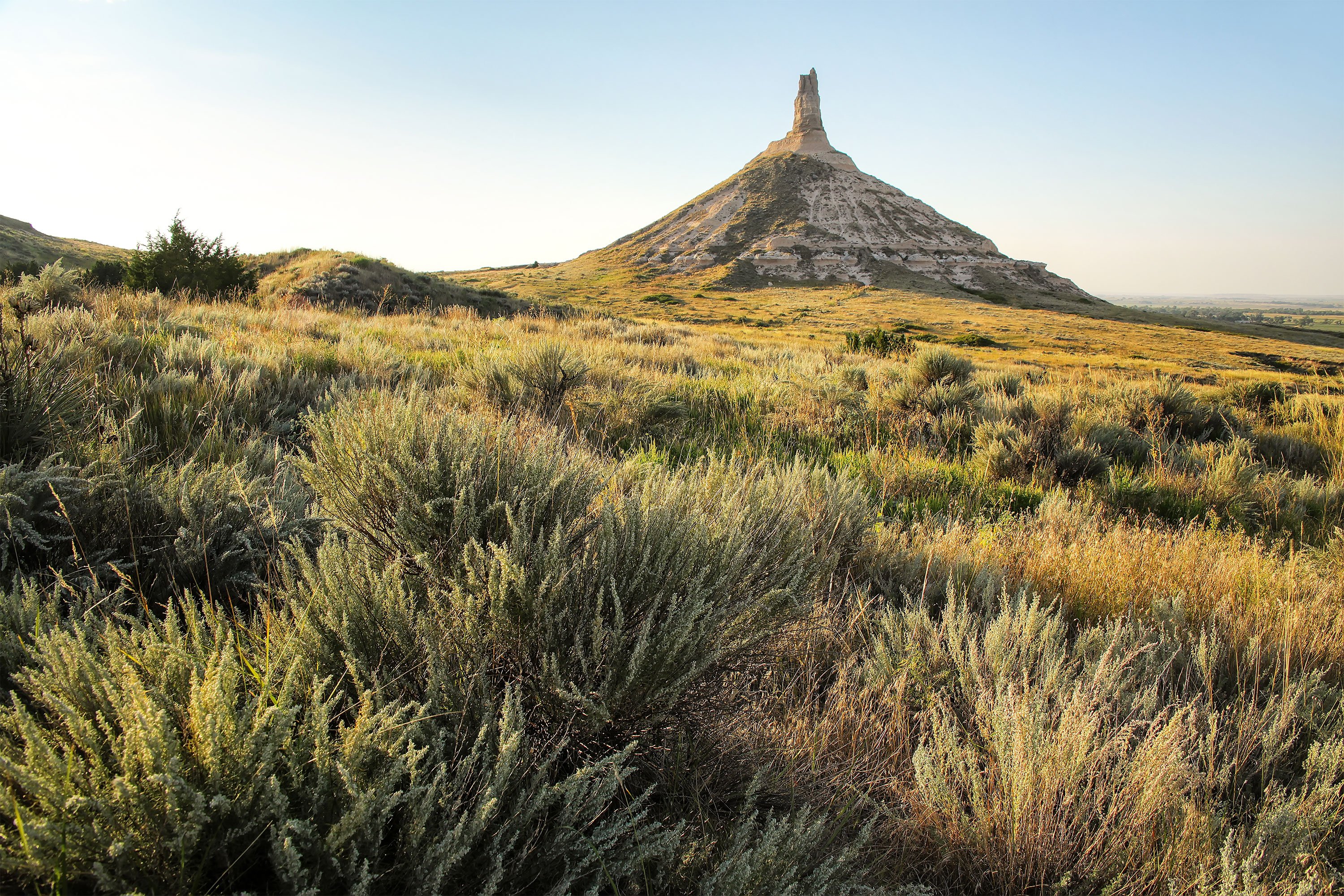 Chimney Rock, an iconic geological spire in western Nebraska, is a symbol of wilderness in a state known for farm fields and grassy plains.
References cited from the report include past surveys from Oklahoma State University, the University of Georgia Extension, and the University of Missouri Extension. See the full report here.
By publishing this report alongside traditional farmland metrics, the survey documents a shift in how recreational access is shaping rural land economics. It puts hard numbers on hunting leases and elevates an informal market into the state’s official economic record.
The report signals that recreational access is no longer peripheral to farmland value, but an increasingly durable part of how rural land is managed and monetized in the state of Nebraska and beyond.