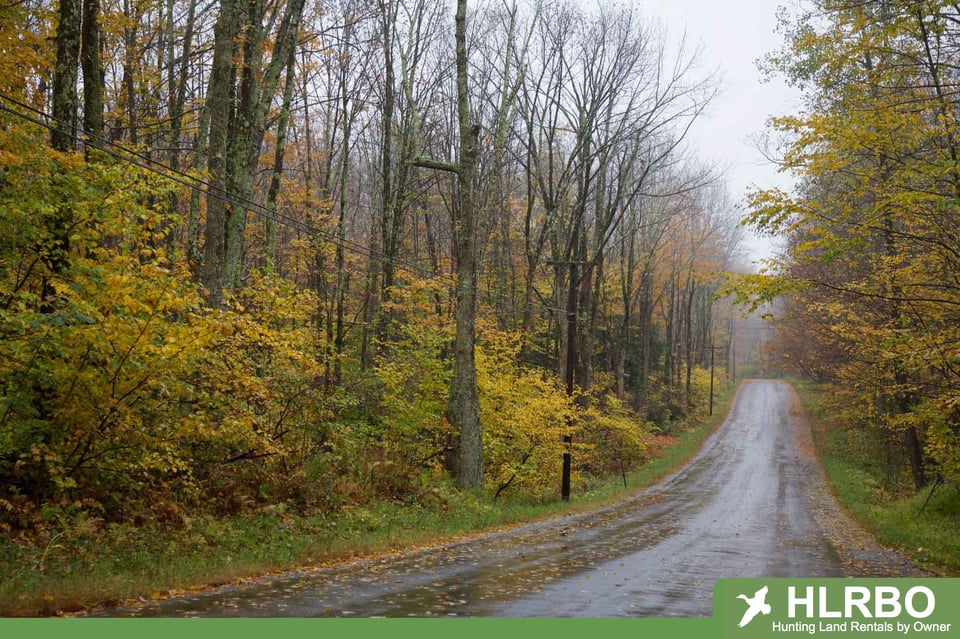
Nourse Sugarbush features an old-growth northern mesic forest on the northwest flank of Mt. Ashwabay, a steep-sided hill rising over 700' above Lake Superior. To the south, the land rises abruptly to the Bayfield outwash sands and supports dry forest and barrens communities. In contrast, although situated on the same glacial outwash, the sugarbush developed in the shadow of Mt. Ashwabay, which protected it from fire. Large hemlock and sugar maple, some towering 100 feet high, dominate the canopy with associated species of yellow birch, basswood, paper birch, and red oak. The understory is composed of ironwood, sugar maple, and balsam fir. The shrub layer is sparse; groundcover includes wild sarsaparilla, hairy sweet cicely, doll's-eyes, rosy twisted-stalk, intermediate wood fern, partridgeberry, and violets. Densely packed territories of the black-throated blue warbler (Dendroica caerulescens) indicate the forest contains optimal habitat for this rare species. The site has a long history of maple sugaring for hundreds of years the Ojibwe tapped the large trees for maple syrup production and diagonal slash marks from early sap collecting are still visible on some trees. Nourse Sugarbush was purchased by the Mt. Ashwabay Outdoor Education Foundation and later donated to the State of Wisconsin. It was designated a State Natural Area in 2006.