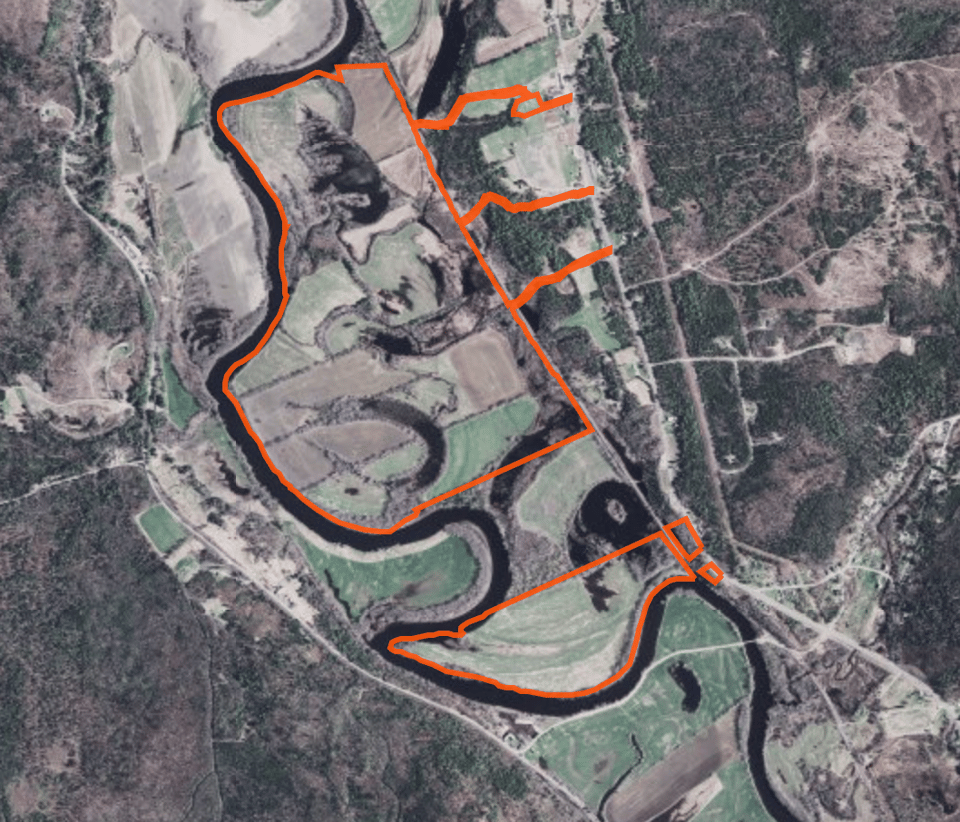
The Connecticut River frontage is a woodland habitat ranging from several feet to several hundred feet in width. The entire area, with the exception of a 3- to 5-acre access site, lies entirely within the Connecticut River floodplain. The eastern boundary is the Canadian National railroad tracks and the western boundary is 20,000 feet of river frontage. Approximately 50% of the land area is subject to annual flooding; 472 acres are upland habitat and 138 acres are wetlands.
There are 5 primary wetland sites due to beaver impoundments that are annually recharged from floodwaters, springs and small tributaries. Habitat diversity ranges from semi-permanent wet meadow to permanent open marsh and shrub/scrub wetlands.
The tillable land area is comprised of 70% commercial cropland of hay, alfalfa and corn, and 30% pastureland and reverting field land. These lands are fertilized, limed and harvested annually by local farmers.
Approximately 104 acres is woodland/edge habitat. Speckled alder occurs in the wet edge areas with aspen, cherry and blackberry dominating the drier sites. The Fort Hill Area (some 14 acres) as well as several other small blocks of land are wooded - dominated by sapling/pole size aspen, red maple and scattered balsam fir. The understory is thickly vegetated with blackberry and raspberry.