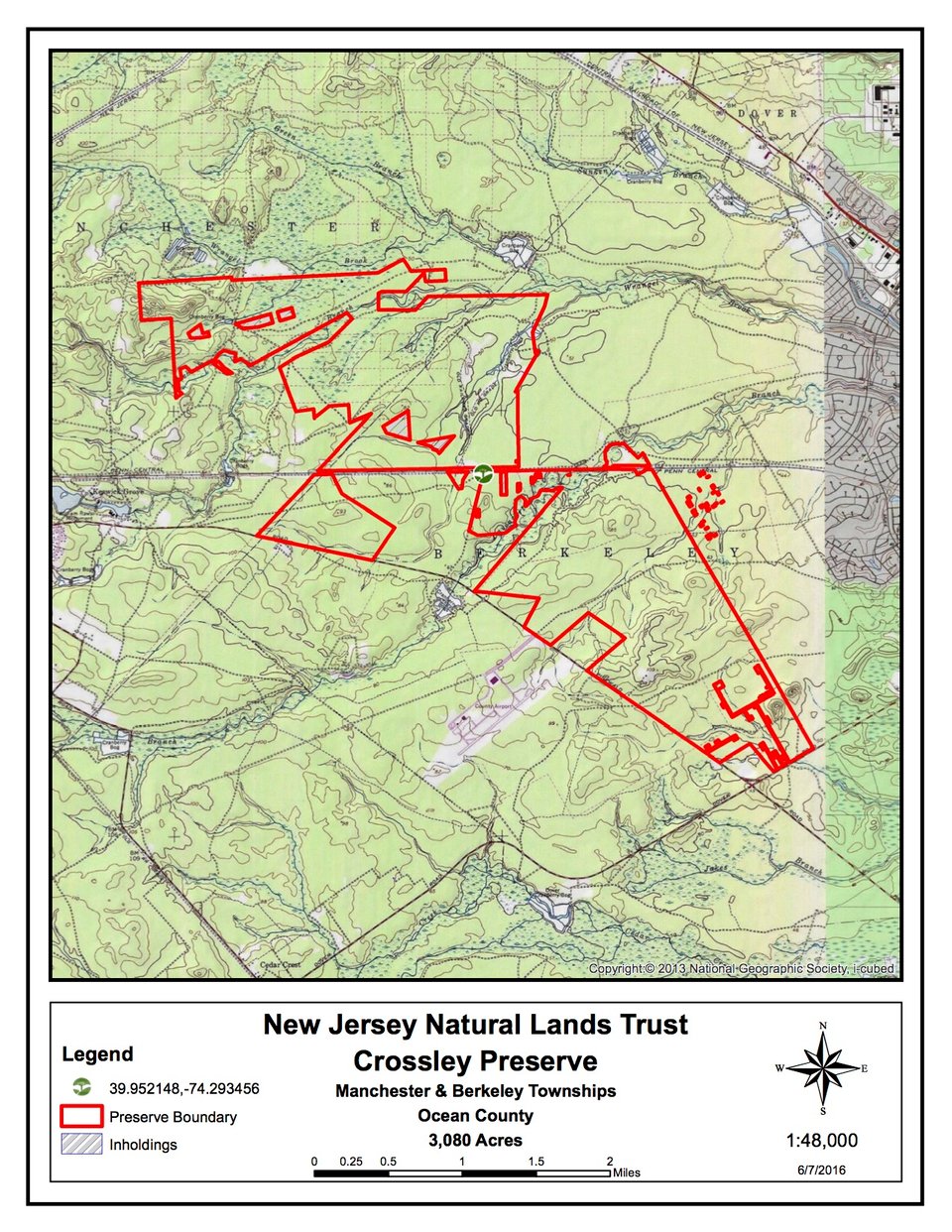
One of the Trust’s premiere preserves, and certainly its largest, Crossley highlights important aspects of open space preservation: endangered species protection, historic and cultural sites,
environmental education and outdoor recreation. Crossley is named for the forgotten clay-mining town dating to the late 1800’s. Clay dug from Crossley was used to produce brick, terra cotta and
pottery. Surface pits that were dug to extract the clay now form dozens of ponds used for breeding by Pine Barrens treefrogs. The old “donkey” railroad hauled the clay from the pits to load onto
waiting train cars along the former Pennsylvania Railroad. The “donkey” railroad now serves as a portion of the 1.5-mile Thomas F. Hampton interpretive trail at Crossley. The hiking trail, named in memory of Thomas F. Hampton, past Executive Director of the NJ Natural Lands Trust, travels through all habitat types of the Crossley Preserve: pitch pine uplands and lowlands, shrub oak and laurels, even areas scorched by past wildfires. Along the trail are abandoned cranberry bogs now grown into solid stands of Atlantic white cedar. Visitors view signs along the way about Pine Barrens ecology, wildfire and controlled or prescribed fire methods, research on endangered pine and corn snakes, endangered plants including the federally threatened Knieskern’s beaked rush and the delicate state endangered Pickering’s morning glory. The trail also points out the features and artifacts of the ruins of Crossley.