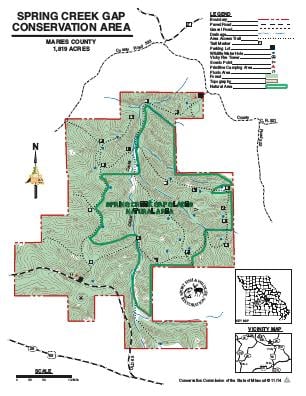
Driving DirectionsFrom Vienna, take Highway 63 south approximately 10 miles, or north of Rolla on Highway 63 approximately 14 miles, take Old 63 north about 0.25 mile to the area.
HighlightsThis area is mostly woodlands and glades. Facilities/features: primitive camping, open vistas, and Spring Creek Gap Glades Natural Area.
About This AreaSpring Creek Gap Conservation Area is in Maries County, approximately 10 miles southeast of Vienna and 14 miles north of Rolla on old Highway 63. This 1,816-acre area was acquired in three parts, starting with the 1948 purchase of a 280-acre parcel known as the Vichy Towersite. The Conservation Department purchased an additional 1,495 acres in 1978 from Dr. A.W. Strickle and added a 40-acre tract in 1980.Spring Creek Gap, with its combination of forests, woodlands, steep topography, dolomite glades and old fields, is an extremely scenic area, especially during the fall color change. The forest has a nice display of spring wildflowers in the ravines. Cedar Creek, an intermittent stream, bisects the area.In 1982, 40 acres on Spring Creek Gap Conservation Area was designated Natural Area and in 2007 the Natural Area was expanded to 692 acres and named Spring Creek Gap Glades Natural Area. Yellow coneflowers, silky asters and blazing stars are some of the colorful plants growing on the natural area. The majority of the forest is made up of oak and hickory in dry dolomite woodlands. White and black oak predominate on rich north and east slopes of the area, and post oak, chinquapin oak, blackjack oak, and eastern red cedar mark woodlands and glades. Planting of shortleaf pine may be seen along old Highway 63.The area features numerous glades, ranging in size from less than one acre to over 10 acres. The natural openings, which occur on low quality soil, harbor remnant prairie plants and provide forage for wildlife.Long term management efforts include opening up overgrown glades and woodlands which will increase the acreage of and diversity of prairie plants. During your visit to the area, you may view various natural resource management practices designed to improve wildlife habitat, maintain watershed quality, restore natural communities, and enhance tree growth and species composition. Watch the areas that have been disturbed as they revegetate through the years. You will find some sites becoming more open with greater ground flora and some better timber quality developing.Wildlife habitat management practices include the creation of watering ponds; shallow water developments which will provide habitat for reptiles and amphibians and woodland thinning followed by prescribed burning to open up the woodland canopy.