 Written by HLRBO Staff|
Last updated
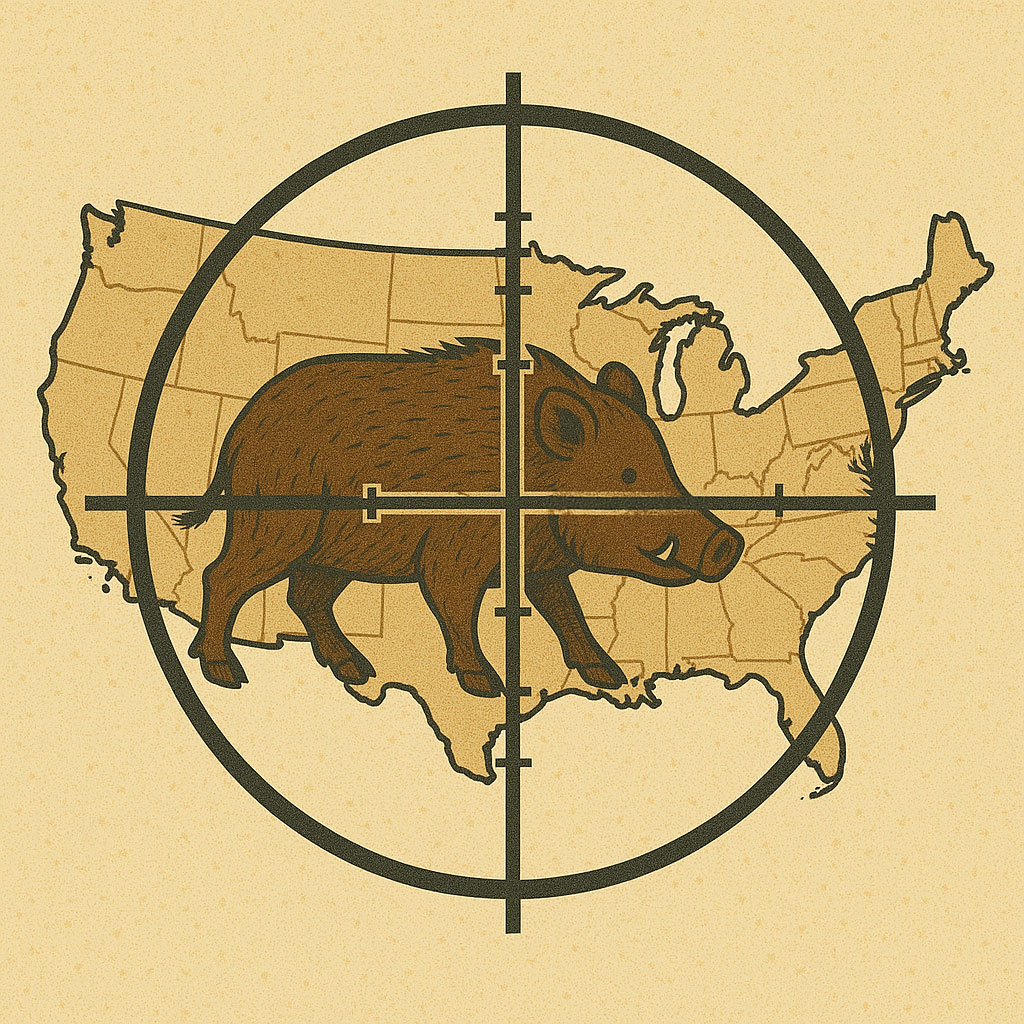
A wild boar invasion is ravaging private land from Saskatchewan to Texas. Invasive pigs are causing billions in damage and driving new laws across the continent.
The feral hog crisis has created a new frontier for wildlife management. Landowners, hunters, and platforms like https://www.hlrbo.com are working to fight back.
This is not a new phenomenon. Headlines like “Government spending $100 million a year to fight off feral hogs, and the pigs are winning!" have cropped up in recent years.
In 2025, the chaos continues. One headline this year revealed farmers in Saskatchewan reporting wild boars "tearing through fields and chasing livestock.”
One researcher called them “an ecological trainwreck” as populations continued to grow.
Boar Damage Spreads Across North America
New legislation is passing to fight the invasive pigs. In January, the Saskatchewan government enacted a moratorium to combat the province’s growing pig problem. The ban prohibits new licenses and mandates that existing farms must register, meet fencing standards, and report any escapes.
Wild pigs breed rapidly and prove hard to stop. In the U.S., feral swine have spread into at least 35 states. Texas alone estimates up to $500 million in annual damage, with wild pigs now present in most of the state’s counties.
Crops, pasture, fencing, and wildlife habitats are being destroyed. Government efforts exist but can’t keep up with the rate of damage. (The USDA has a comprehensive resource page about feral swine.)
States like Texas have passed laws allowing year-round hog removal. Private landowners have become a front line in the battle, with many now leasing access to their properties for hog hunting to control populations and recoup losses.
Hunting Wild Hogs
In Edwards County, TX, one HLRBO property touts “no trophy fees, no size limits, and unlimited hog harvest.”
Boss Hog Hunts, found on a 1,000-acre expanse, has lodging on site and attracts hunters with its “fully free-range, no high fences” promise.
Another Texas option hosts “Thermal Hog Hunts” at night. The landowners offer thermal scopes and drone technology "to locate and track large groups of hogs” in the dark.
“Stalking hogs under the Texas stars is truly a unique experience that you won't forget,” the HLRBO listing cites.
HLRBO gives landowners full control over pricing, access rules, and availability. Hunters choose from vetted listings with maps and landowner communication tools.
Summer is especially active, since hogs can be hunted year-round in most states.
“Summer hunting is overlooked,” says HLRBO’s seasonal guide, “but it’s key for invasive species control.”
Platforms like HLRBO are turning a destructive force into an opportunity, helping landowners protect their acres and hunters find access from Saskatchewan forests to the hill country of Texas, and beyond.
Pig Problems Around America
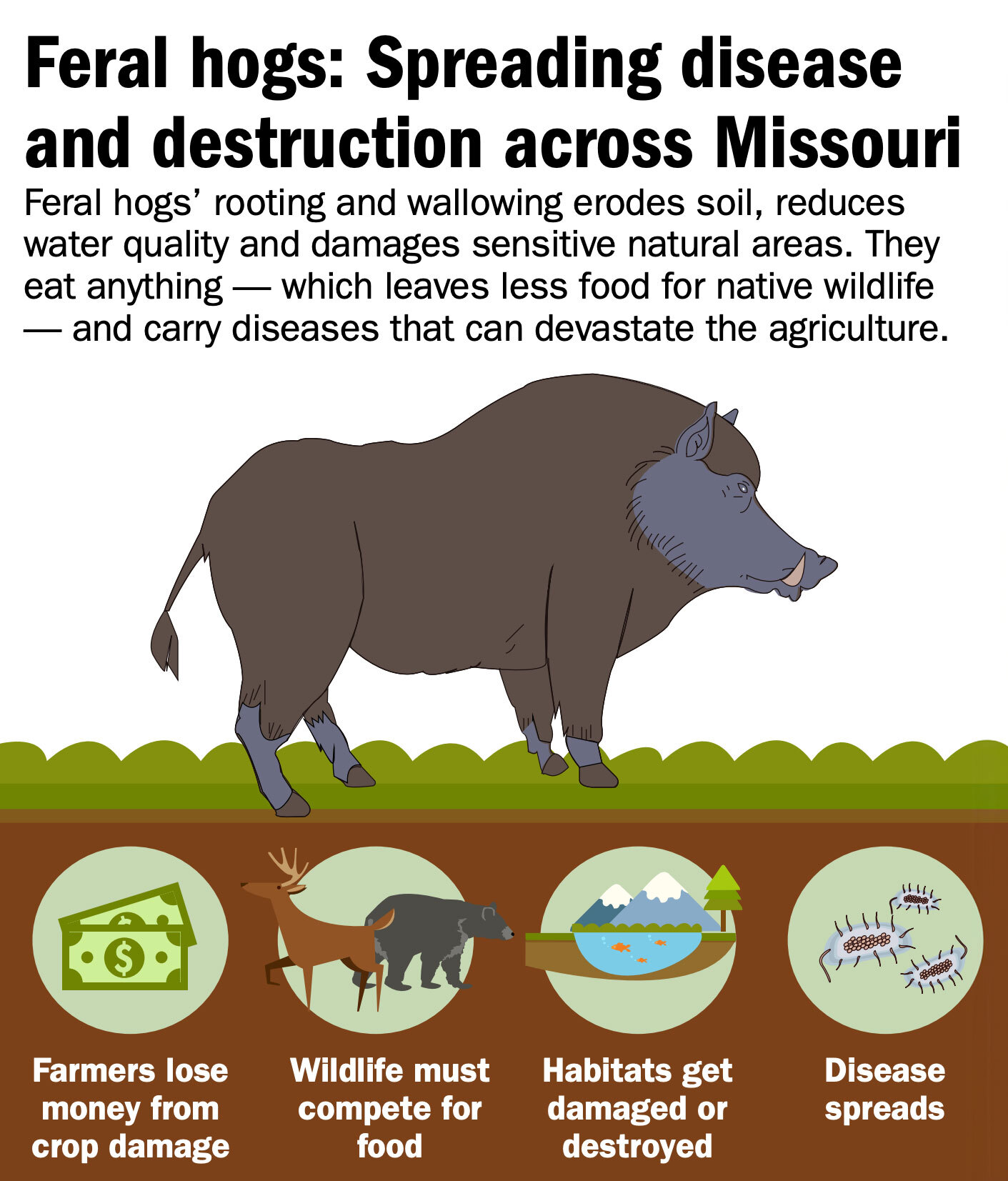
There are dozens of case studies to cite. One microcosm to look at is Missouri. Starting over 10 years ago, the pig problem has reared its snout around the state.
In a 2019 article published in the Columbia Missourian newspaper, a reporter goes deep on the invasive species management program in southern Missouri.
Reporter Anna Lewis documented how feral hogs had become a major threat to agriculture and rural landowners. She quotes farmers who were forced to stop planting crops after hogs repeatedly destroyed fields, digging up newly planted beans within days in one example.
The hogs, nonnative and aggressive, caused significant damage by rooting through soil, tearing up pastures, and contaminating land. Weighing hundreds of pounds in some cases, they also can carry diseases that endanger both livestock and human health, the article cites.
Financial strain grew as hogs ruined hay fields and pastureland. Farmers invested in traps, fencing, and hunting equipment, but some still had to reduce their cattle herds due to the loss of feed and viable grazing land.
Government Response to Invasive Hog Herds
The Missouri Department of Conservation stepped in to help. It focused on trapping as its main eradication tool, using large pens to capture entire groups of hogs.
Hunting was banned on state conservation land to protect trapping operations and reduce the risk of hunters accidentally spreading hog populations further. But that approach created tension with landowners who believed that hogs were using conservation areas as “safe zones.”
Some groups argued for allowing bounties and dog-assisted hunting, citing that hunting could complement trapping and improve control over the more elusive adult boars.
Ultimately, the situation illustrated the challenges of managing an invasive species when public policy, private property rights, and local culture collide.
Though thousands of hogs were killed through state-run efforts, local stakeholders believed broader cooperation and more flexible strategies were essential for long-term success.
By 2025, Missouri's feral hog eradication efforts have yielded significant results. The Missouri Feral Hog Elimination Partnership reported a major decrease in occupancy by feral hogs since 2016, with over 30,000+ hogs removed in the last few years and millions of acres scouted for hog activity.
Despite these successes, challenges remained. Budget cuts have hurt eradication efforts. Experts emphasized the need for sustained, coordinated strategies to prevent resurgence, as feral hogs are prolific breeders and can quickly repopulate areas if control measures lapse.
Minnesota's Wild Pig Strategy Sets It Apart
Are there any states that do not have hog issues? Minnesota offers a rare success story. While many states struggle with expanding populations, Minnesota has prevented wild pigs from establishing a foothold through surveillance and “rapid response” strategies.
The state’s Department of Natural Resources (DNR) eliminate incursions before they become breeding populations. Officials use trail cameras, aerial surveys, and public reporting tools, such as the “Squeal on Pigs!” app and tip lines, to locate sightings.
Once confirmed, response teams trap or euthanize the animals to prevent population growth.
As of 2025, Minnesota remains one of the few U.S. states listed by the USDA as having no established feral swine population, a testament to effective management amid growing regional concerns about feral swine in Canada and the U.S.