 Written by Justin Park|
Last updated
Imagine you’re out hunting with a map in hand. You’re looking at property lines to stay legally within Bureau of Land Management (BLM) boundaries and off neighboring private land.
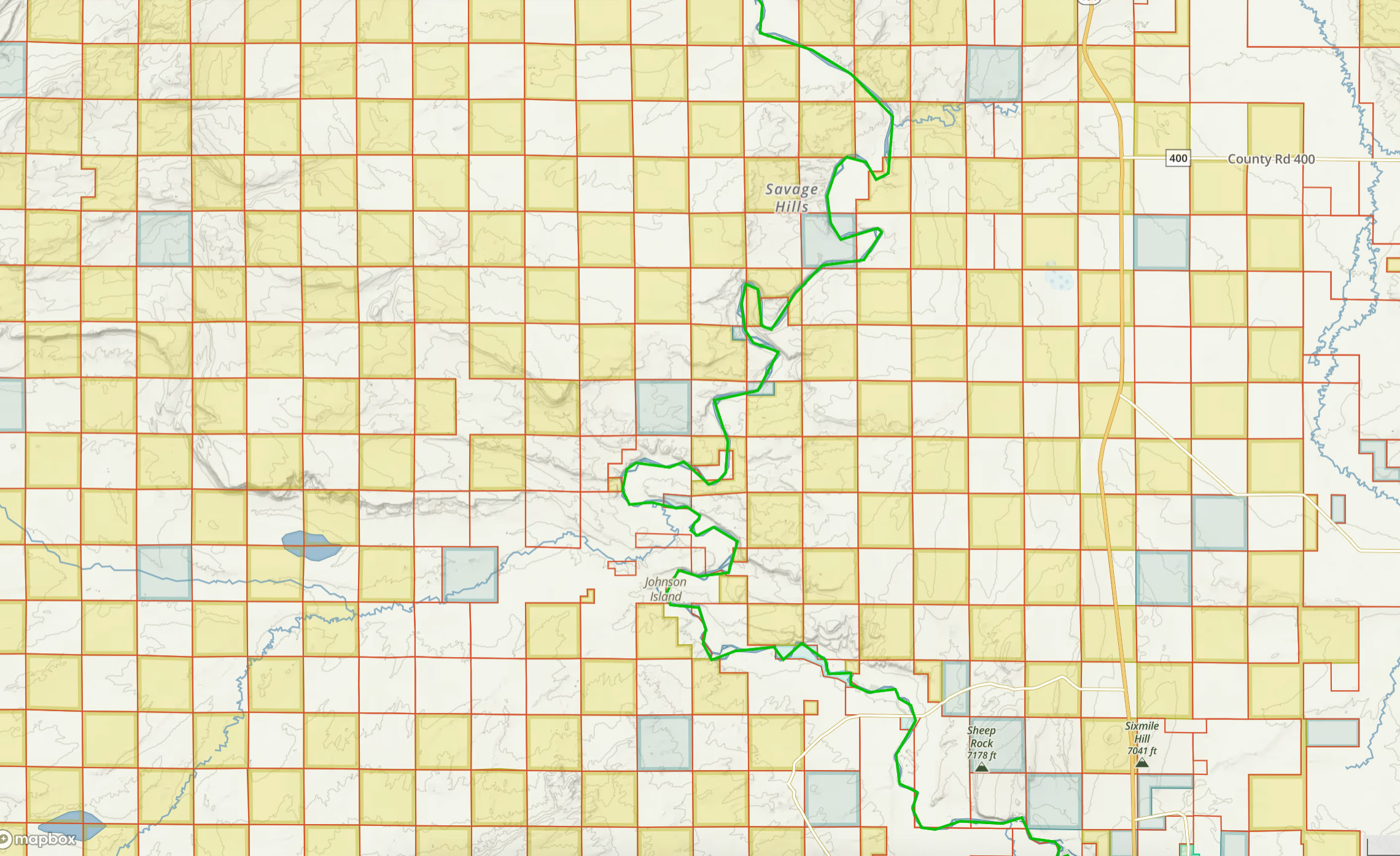
The map is a surveyed mishmash common in the West, an intermixed splay of BLM and private parcels. Red and black squares on a checkerboard.
You see elk and step across, corner to corner, to access another BLM plot in hot pursuit.
Last hunting season, that action could have landed you in federal court. One group was sued for $9 million—a steep punishment for a so-called “corner crossing” in Wyoming.
Land Access Goes to Court
Last month, a Tenth Circuit Court ruling brought clarity to what has long been a land access gray area. A court has ruled to legalize the act of corner crossing in six Western states.
The ruling, endorsed by organizations such as Backcountry Hunters & Anglers (BHA) and the Rocky Mountain Elk Foundation, was declared a victory for outdoorsmen. But private landowners fear increased trespassing will result.
Colorado, Kansas, New Mexico, Oklahoma, Utah, and Wyoming are the affected states. The court ruled that corner crossing is not considered trespassing under federal law—but hunters should still check local regulations before stepping across.
Heath Schubert, CEO of land-leasing platform HLRBO, said the ruling is a hot button in much of the West. “Private landowners in many areas will likely feel pressure to invest in fencing or signage to protect their land.”
A Ladder in a Field
The Tenth Circuit ruling comes with a satirical-sounding backstory. Hunters in Wyoming were accused of trespassing when they used a ladder in an open field to cross from one corner of public land to another.
The landowner held that the hunters trespassed “through the airspace” of his private parcels. Lawyers pursued $9 million in damages.
Under previous interpretations, if two square parcels of public land touched only at a corner, the public couldn’t cross.
The federal court found that crossing “without physically contacting private land and without causing damage to private property does not constitute an unlawful trespass.”
Millions of Acres of Land
How much does the ruling open up? One study revealed more than 8 million acres of public land were held inaccessible by private corners.
With the ruling, BHA announced a “major win for hunters, anglers, and anyone who values the freedom to access and enjoy our public lands.”
But consequences for private landowners could be deep. Legal papers filed by one group claimed corner crossing could erase “billions of dollars” in private land value.
Schubert believes only a small percentage of private landowners will be affected. HLRBO includes thousands of landowners and hunters on its platform.
The impact on hunting, property values, and private landowner relations remains to be seen. Schubert said hunters near contentious private land, out of courtesy, should try and reach out to landowners directly to inquire about access.
New Rules of the West
The ruling is a shift, not a free pass. Enforcement guidelines are forthcoming, following the Tenth Circuit’s decision.
Advocacy groups urge caution. They recommend confirming local laws and, where possible, contacting landowners before crossing a corner.
“If there is private land listed on a platform like HLRBO, you can message a landowner or give them a call,” Schubert said.
One way to avoid conflict altogether is to make explicit agreements with private landowners regarding hunting access; this is the service the HLRBO platform provides.
Schubert continued, “Hunters can protect themselves from risk of trespassing by getting access documented in an agreement, which our platform requires.”
In the West, where public land access is both a birthright and a battleground, corner crossing remains contentious. But with millions of acres now arguably unlocked, a new precedent is taking shape—one step, or ladder rung, at a time.
Author Bio:Justin Park is a Colorado-based writer, editor, and avid hunter with a passion for the outdoors. He contributes to leading publications such as GearJunkie, Popular Mechanics, Powder, and Mens Journal, and serves as Editor of Wild Snow. Park is deeply involved in conservation and recreation advocacy, serving as Chapter Chair of the Rocky Mountain Elk Foundation (RMEF) in Summit County. He also represents RMEF on a state recreation committee focused on proactively addressing land use conflicts.