 Written by HLRBO Staff|
Last updated
The 2026 early teal season runs nine days in the Central, Mississippi, and Atlantic flyways, and the reason is one figure in one federal report: 4.4 million blue-winged teal in the traditional survey area. The threshold for 16 days is 4.7 million. The gap is about 300,000 birds, roughly six percent, and it costs three flyways a week of September.
Why the 2026 Early Teal Season Is Nine Days
The U.S. Fish and Wildlife Service put blue-winged teal in the traditional survey area at 4.4 million in its 2025 Waterfowl Population Status report, four percent below 2024 and 13 percent below the long-term average. That number sets season length directly. Above 4.7 million, states in the Central, Mississippi, and Atlantic flyways may run 16 days. Between 3.3 and 4.7 million they get nine. Below 3.3 million the season closes. The Pacific Flyway has no early teal season at all. At 4.4 million the season is nine days, and still 1.1 million birds above the closure floor. Shortened, not threatened.
It is the second nine-day season in a row. The 2024 estimate slipped under 4.7 million for the first time since 2005, which cost hunters seven days in 2025, and the 2025 count came in lower still. "While it's disappointing to see the decreased hunting season, teal remain an important and resilient species," said Kevin Kraai, waterfowl program leader for the Texas Parks and Wildlife Department, when Texas announced its 2025 dates.
Habitat is the harder number. The 2025 May pond estimate was 4.2 million, a 19 percent drop from 5.2 million in 2024 and 20 percent below the long-term average. Dry prairie in May is what produces a lower count in July, and that is also the strongest case against the shorter season. Luke Naylor, wildlife management chief for the Arkansas Game and Fish Commission, has noted that the teal trigger predates the adaptive machinery now applied elsewhere. "Our current population threshold for blue-winged teal is based on the assessment of teal harvest potential developed in 2015," Naylor said, and on pintails he was blunter: "habitat, or lack thereof, appears to be the key issue driving this population's dynamics, not hunting." A fixed 2015 threshold is a coarse instrument for a bird whose fortunes are set by May water. The framework your state adopted governs your September.
The Earliest Duck on the Calendar
Blue-winged teal set the calendar because they leave first. They depart breeding areas in August or early September and reach wintering areas as early as early September, ahead of every other duck in the flyway. They are small, roughly 16 inches and under a pound, and they feed on invertebrates and seeds in shallow water that is first to go cold. Cool north winds move them, so a hunter not watching the forecast in mid-September is hunting yesterday's birds.
That biology is the whole justification for a separate season, and the arithmetic on one state lands hard. Arkansas closes teal on September 27, 2026 and does not open its regular duck season until November 21, 2026, eight weeks later. By then most bluewings that passed through are on the Gulf coast or south of the border. For this bird, the nine days in September are close to the whole opportunity.
The 2026 Dates, and the Paperwork
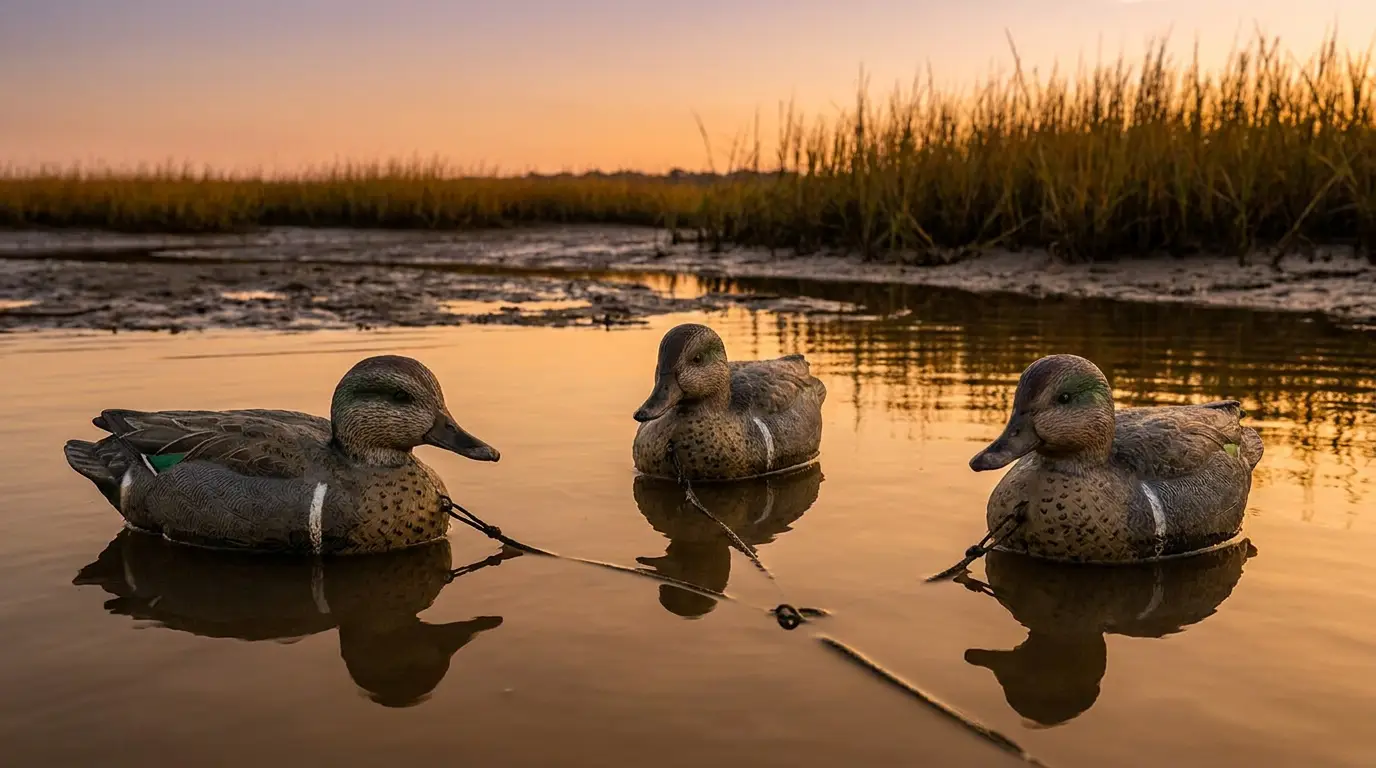
The Texas Outdoor Annual lists the September teal-only season as September 19 through 27, 2026, statewide, six blue-winged, green-winged, or cinnamon teal daily and possession of three times the daily bag. Arkansas matches it at September 19 through 27, 2026, six and 18. Louisiana's published 2026-2027 regulations also read September 19 through 27 statewide, six daily and 18 in possession. Missouri opens a week earlier at September 12 through 20, 2026, six and 18, approved March 27, 2026 pending final federal approval. Iowa opens earliest at September 5 through 13, 2026.
Tennessee is the useful exception, because the state runs no teal-only season at all. The Tennessee Wildlife Resources Agency's season planner lists a combined Wood Duck and Teal season of September 12 through 16, 2026, five days, six ducks daily with no more than two wood ducks.
Line those up and a pattern appears that the individual announcements hide. Every nine-day season above opens on a Saturday and closes on the second Sunday after, capturing exactly two full weekends. Together those states cover September 5 through 27, a 23-day stretch of flyway, and no single hunter gets more than nine of it.
Shooting hours are where states diverge, and where citations get written. Arkansas begins teal shooting hours at sunrise. Missouri runs sunrise to sunset. Iowa spells it out for hunters trained on the regular season: sunrise to sunset, not the half hour before. Texas and Louisiana both run one-half hour before sunrise to sunset. Read your own state's line, not the one you memorized in November.
The paperwork is short and non-negotiable: a state hunting license, Harvest Information Program registration or certification, and a Federal Duck Stamp at 16 and older. The 2026-2027 stamp, James Hautman's three buffleheads, went on sale in late June 2026, and Texas accepts it electronically or physically. Texas also requires a migratory game bird endorsement at 17 and older. Arkansas requires proof of HIP registration in the field at 16 and older, and it sells its state waterfowl stamp separately rather than folding it into the license: $7 for residents, coded DSR, and $50 for nonresidents, coded DSN, on top of the Federal Duck Stamp. The only hunters exempt are those under 16 and holders of a Nonexpiring Lifetime Sportsman's Permit.
Identify First, Then Shoot
A teal-only season is not a test between teal species. Blue-winged, green-winged, and cinnamon teal are all legal. The test is teal against everything else, and in September that means northern shoveler, northern pintail, and wood duck, all closed and all working the same shallow water.
Iowa's Department of Natural Resources reduces it to two questions asked in order. Does the bird show a sky, slate, or light blue shoulder patch? Only blue-winged teal and northern shoveler carry that color on the wing. Does it have a small, regular bill, or the long, sloping, spoon-shaped bill of a shoveler? Iowa's harder-case guidance is worth carrying too: singles and pairs passing overhead do not give a clean view of shoulder color and are most likely non-teal, so skip those shots. If in doubt, do not shoot, and wait for the second pass.
Speed is what makes this hard. Bluewings move in unison in flocks of ten or more and drop into decoys before a gun is shouldered, and in dull late-summer plumage the blue shoulder flash is the most visible thing on them. Their body shape sits between the long, sleek line of a hen pintail and the blocky, head-up flight of a wood duck, which is precisely the shape of the mistake. That is the real argument for the sunrise start several states use. Identification in gray light on a bird moving that fast is not realistic, and a shoveler in the strap is a violation either way.
Nine Days of Shallow Water
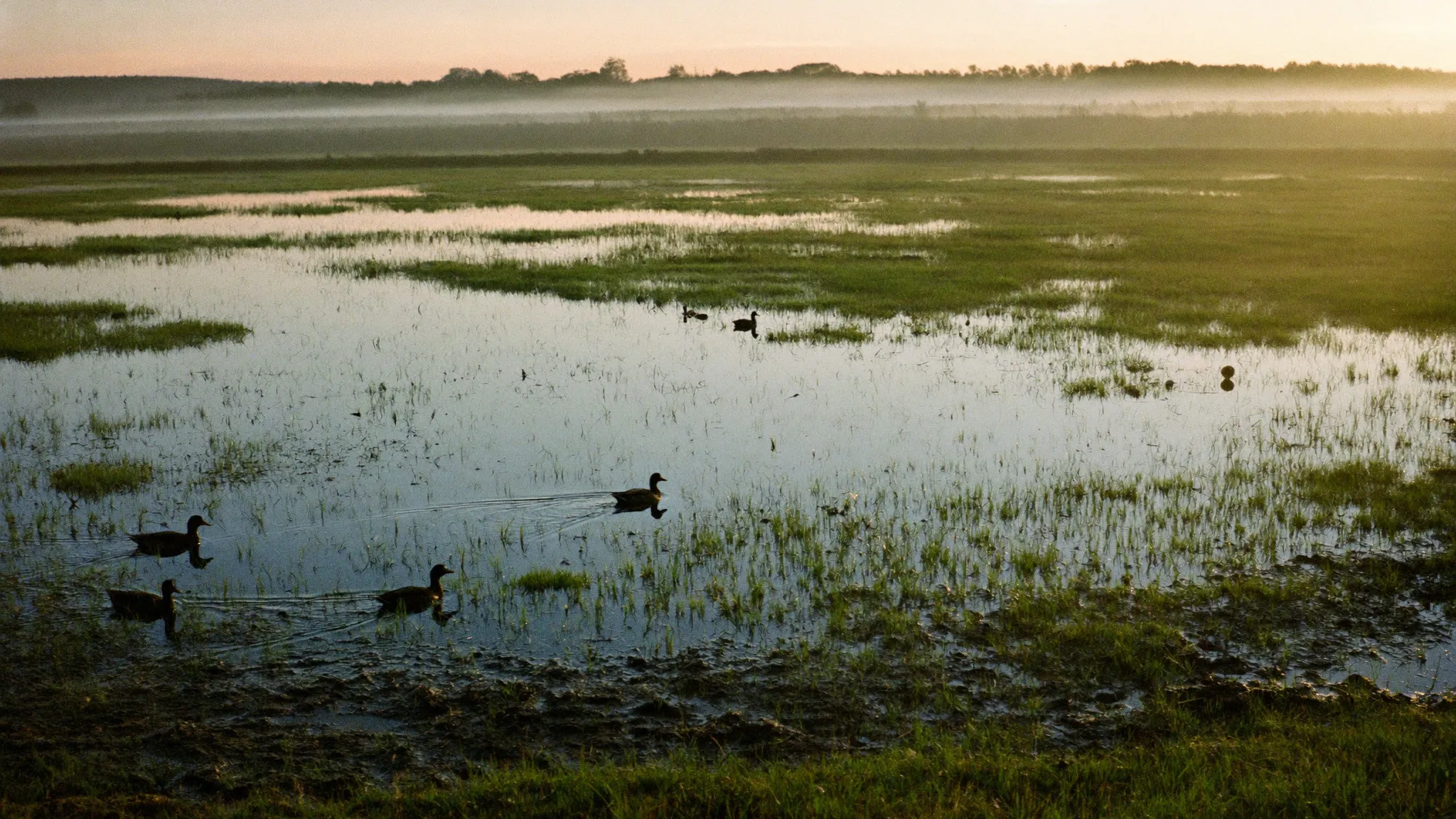
Teal habitat is specific and it is shallow. Bluewings use shallow freshwater wetlands full of invertebrates on the breeding grounds and shallow emergent wetlands, fresh to intermediate salinity, on migration. Translated to a hunt, that means mudflats with an exposed edge, moist-soil units drawn down to a few inches, flooded rice and bean stubble, and pond ends where smartweed and millet have gone to seed. Deep water is not teal water. Six to ten inches with mud showing is.
Which makes September teal hunting an access problem before it is a shooting problem. The ground that holds teal is thin and deliberately managed: rice fields between flood cycles, moist-soil impoundments, irrigation and catfish ponds, shallow flooded ag. Much of it is private, and much of it gets leased for nine days rather than a season. For the fuller picture of the fall, read what the 2026 breeding surveys told us.
Nine days rewards the hunter who lines up water in July rather than in the third week of September.
HLRBO lists waterfowl leases across the country, including flooded ag, moist-soil units, and shallow marsh, with verified listings, real lease agreements, and secure payments behind every booking. Find a lease or subscribe to become an HLRBO member.