 Written by Justin Park|
Last updated
Public lands in America are often seen as a birthright with vast, open spaces available to all, free of charge. But that perception masks a complex financial reality where maintaining access to millions of acres costs real dollars to the U.S. populace.
Taxpayers, hunters, anglers, and government budgets all shoulder the burden of much of what is considered to be “free.” At the same time, when federal land dominates a region, local communities may miss out on property tax revenue and economic benefits from private development.
This all came sharply into focus over the past few weeks. Just days ago, Senator Mike Lee (R-Utah) withdrew a controversial provision from the "One Big Beautiful Bill" that would have facilitated the sale of huge swaths of federal lands.
Significant public and bipartisan opposition forced Lee, who has long argued the federal government mismanages land, to backtrack and rescind the selloff provisions.
As debates continue over federal and state laws, agency budgets, and land sales, it's time to reexamine what “free” really means.
The Value of Public Lands
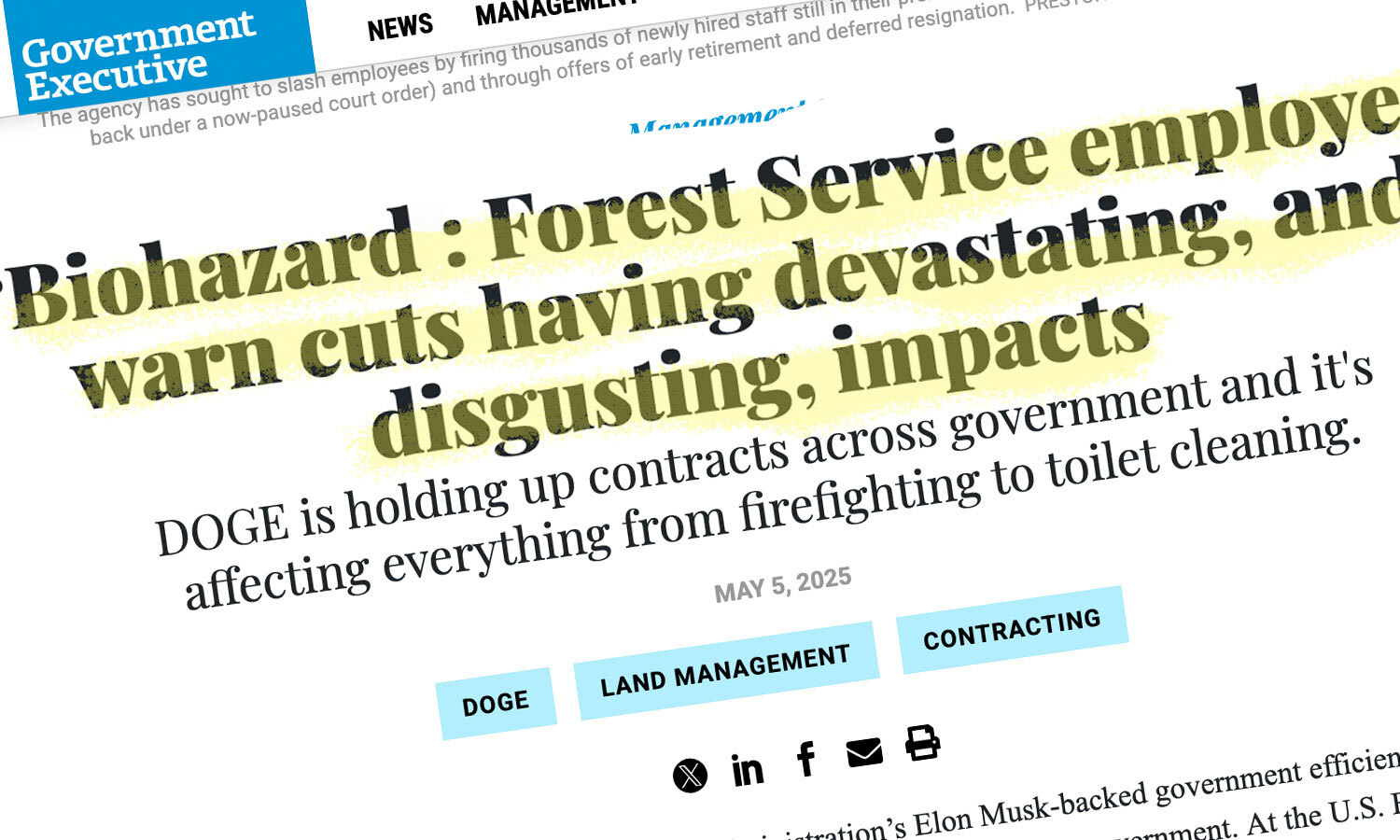
Public land advocates extol the wonders of free access to the 640 million acres of minimally developed American landscapes. But that’s a tough word to use when the U.S. Forest Service budget alone for fiscal year 2025 was $8.9 billion.
Wildfire mitigation, road and trail maintenance, and approximately 35,000 salaries certainly aren’t free.
These costs are a drop in the bucket of a roughly $1.7 trillion budget the government proposed in May. But the threat of land selloff and also worker layoffs via executive order drew innumerable headlines decrying the disruption.
“Our public lands and waters are uniquely American and are the foundation of the $1.2 trillion outdoor recreation economy, supporting 5 million jobs, and fueling businesses in communities large and small, rural and urban,” said a press release from the Outdoor Recreation Roundtable. This was in response to proposed public land sales.
A report from the Bureau of Land Management estimates that the 245 million acres of BLM-administered lands generate $250 billion in annual economic activity and support nearly 1 million jobs. And these figures don’t account for the environmental and societal benefits of wild places.
“These places are vital not only to the human communities in and around them but also to vulnerable wildlife struggling to survive in an increasingly developed world,” said The Wilderness Society in a recent statement on proposed land sales.
The Hidden Costs of Public Land
The value and benefits of America’s large swaths of public land don’t, however, erase their costs. They are both obvious and hidden.
The combined budgets of the BLM, USFS, National Park Service, and U.S. Fish and Wildlife topped $15 billion in 2024. Yet, they are considered chronically underfunded, with an estimated $35 billion in deferred maintenance piling up between the agencies’ lands.
Another “cost” comes from a gap in property tax revenue. Many Western states are majority public land, which severely curtails tax revenue for local governments.
This problem led to the development of the Payments in Lieu of Taxes (PILT) program through the Department of the Interior. It will pay out $644.8 million to 1,900 counties in 2025. That number is likely far less than what they’d receive from individual taxpayers on comparable acreage.
Proposed public land sales are often viewed as short-sighted cash grabs. But selling underutilized lands could generate not only one-time sale proceeds but also recurring tax revenues.
However, a counter argument says privatizing public land can backfire, leading to increased fire suppression costs, ecological damage, and reduced public access. Many rural economies benefit more from tourism and recreation tied to public lands than they would from private development.
Senator Lee became a lightning rod for land advocates who see his proposals as shortsighted. Lee argues public lands are underutilized and mismanaged. “I continue to believe the federal government owns far too much land,” he said in a statement.
Public land sales are mostly an unpopular idea among Americans. But advocates should support open-eyed assessments of the real costs. Minimizing bloat in the agencies that manage our lands (and their respective budgets) will help ward off future attempts to sell off our shared heritage.
Our vast public lands offer immense value that is often taken for granted. We as voters and citizens should push for smarter solutions, sustainable revenue models, and better management where appropriate to preserve what truly is America’s best idea.
Author Bio: Justin Park is a Colorado-based writer, editor, and avid hunter with a passion for the outdoors. He contributes to leading publications such as GearJunkie, Popular Mechanics, Powder, and Men's Journal, and serves as Editor of Wild Snow. Park is deeply involved in conservation and recreation advocacy, serving as Chapter Chair of the Rocky Mountain Elk Foundation (RMEF) in Summit County. He also represents RMEF on a state recreation committee focused on proactively addressing land use conflicts.