 Written by Justin Park|
Last updated
There are a lot of things crammed into House Resolution 1, also known as the One Big Beautiful Bill Act, including a controversial proposal to mandate the sale of federally managed public lands.
Despite bi-partisan opposition and public outcry to a previous amendment regarding public land sales that led to its removal from the bill text, Senator Mike Lee (R–Utah) has proposed an amendment to H.R. 1 that would require the sale of between 2 and 3 million acres of public land in the West.
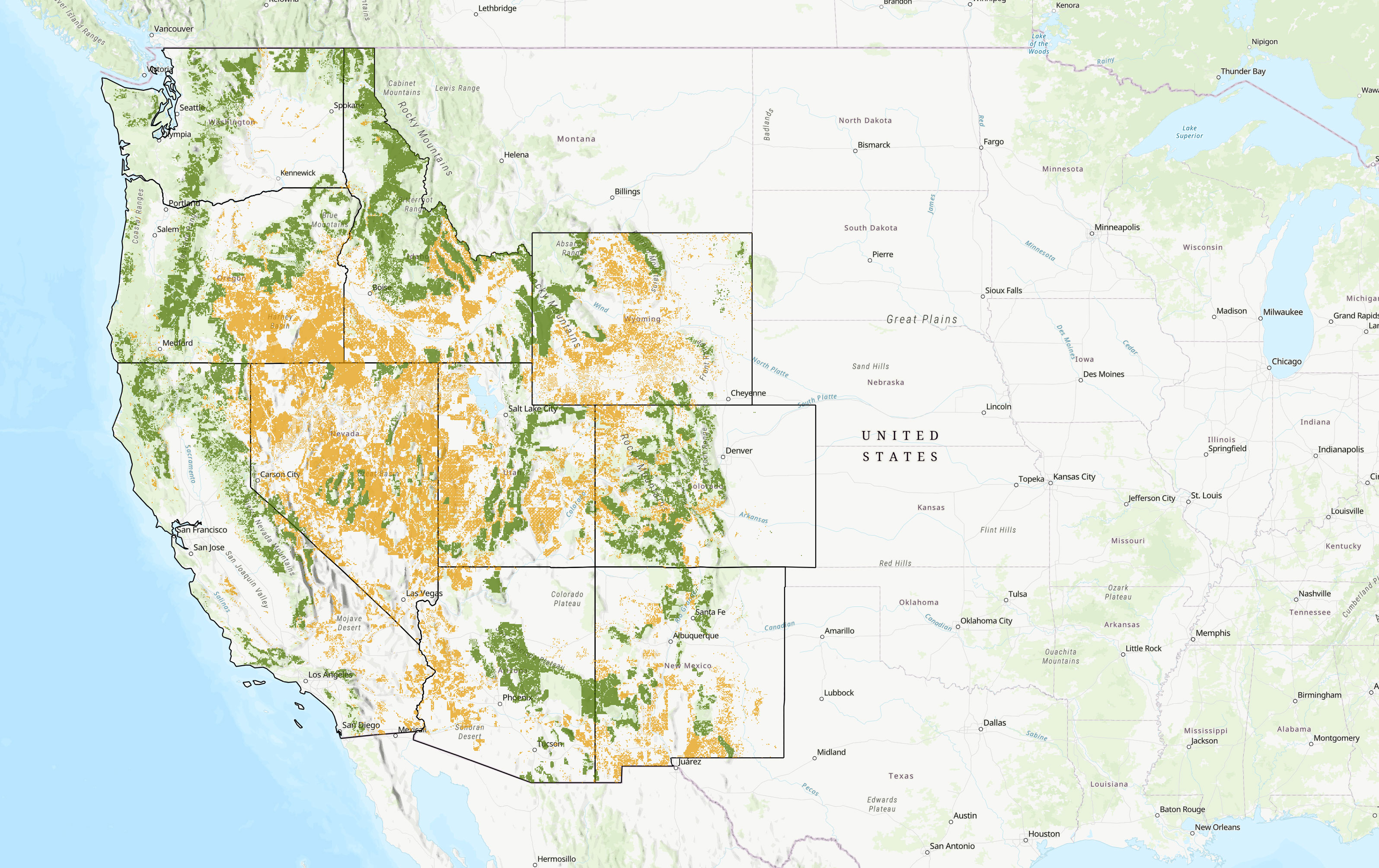
The amendment stipulates that public land to be sold “shall be used solely for the development of housing or to address associated community need.” It exempts National Parks, Wilderness Areas, and other protected classes of federal lands. The Outdoor Alliance has created an interactive map showing the Bureau of Land Management and U.S. Forest Service lands that would be eligible for auction.
Not surprisingly, environmental groups such as the National Wildlife Federation, Sierra Club, and Wilderness Society are opposed to the amendment. So are hunting and conservation groups such as the Rocky Mountain Elk Foundation, The Theodore Roosevelt Conservation Partnership, and Safari Club International. The RMEF points out that the proposed amendment would create a “net loss in public access” and sidestep existing processes for selling public lands.
The bill language has some guidance to prioritize selling lands adjacent to already-developed areas and to reduce the much-maligned public-private “checkerboard” pattern which gained headlines in the corner-crossing controversy. However, SCI’s statement points out the lack of consideration for “review of the recreational and ecological values” of the lands to be sold or “consideration of other options such as land transfers or exchanges” in lieu of outright sales.
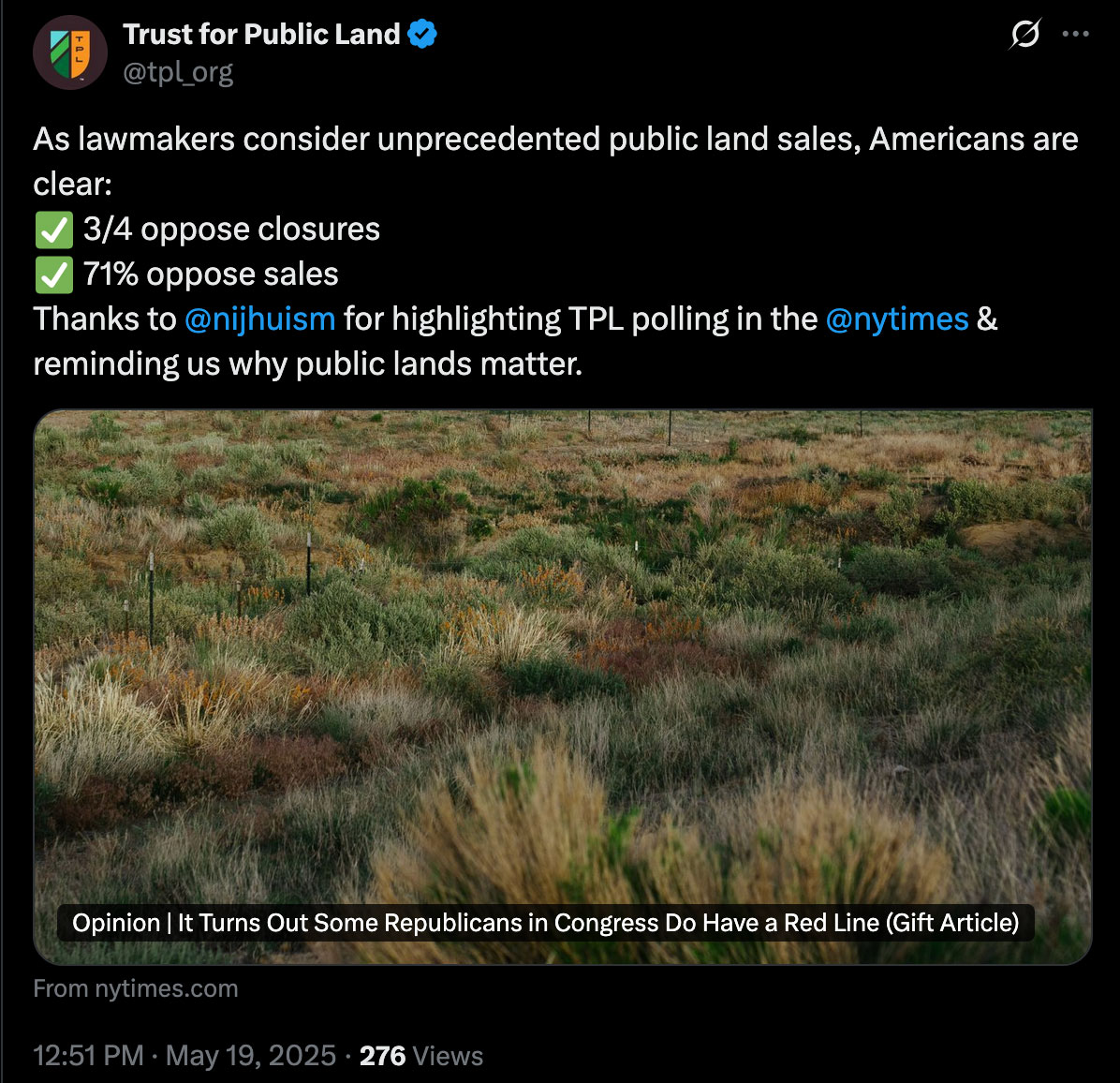
As a leading platform for private land hunting leases, HLRBO also opposes the proposed amendment. While there are times where sales or exchanges of public and private land can make sense for wildlife and conservation, the proposed land sales restrict the auction of federal lands to development for housing. Three quarters of Americans feel housing affordability is a serious problem, but a similar percentage opposes the sale of public lands and the amendment’s impact on housing is unclear.
“Both public and private lands are key to maintaining the healthy wild animal habitats we have in North America,” says HLRBO CEO Heath Schubert. “The proposed federal lands sell-off could impact habitat and access for hunters with no clear benefit for hunting or conservation.”
Even an article in support of the amendment on libertarian magazine Reason’s website admits that the bill’s earmarking for housing development means the government is unlikely to get a fair return for these irreplaceable assets. “Auctions of public land cannot secure ‘fair market value for the tracts of covered Federal land conveyed’ if tracts may only be used ‘for the development of housing or…associated community needs,’” said author Jack Nicastro.
Thankfully, the amendment is, for now, simply proposed. If it is adopted in the final bill text, the updated bill would have to be returned to the House for approval and pass a budget review process. Broad bipartisan opposition and continued public outcry are likely to thwart the amendment at every step of its journey, but the sheer scope of the bill means that this public land sales amendment is just one of many competing proposals on the table.
To contact your lawmakers about the bill, the Rocky Mountain Elk Foundation has a tool for finding them and their contact information via zip code. TRCP also has resources for taking action including ideas for what to say when calling or emailing your representatives.
Author Bio: Justin Park is a Colorado-based writer, editor, and avid hunter with a passion for the outdoors. He contributes to leading publications such as GearJunkie, Popular Mechanics, Powder, and Men's Journal, and serves as Editor of Wild Snow. Park is deeply involved in conservation and recreation advocacy, serving as Chapter Chair of the Rocky Mountain Elk Foundation (RMEF) in Summit County. He also represents RMEF on a state recreation committee focused on proactively addressing land use conflicts.