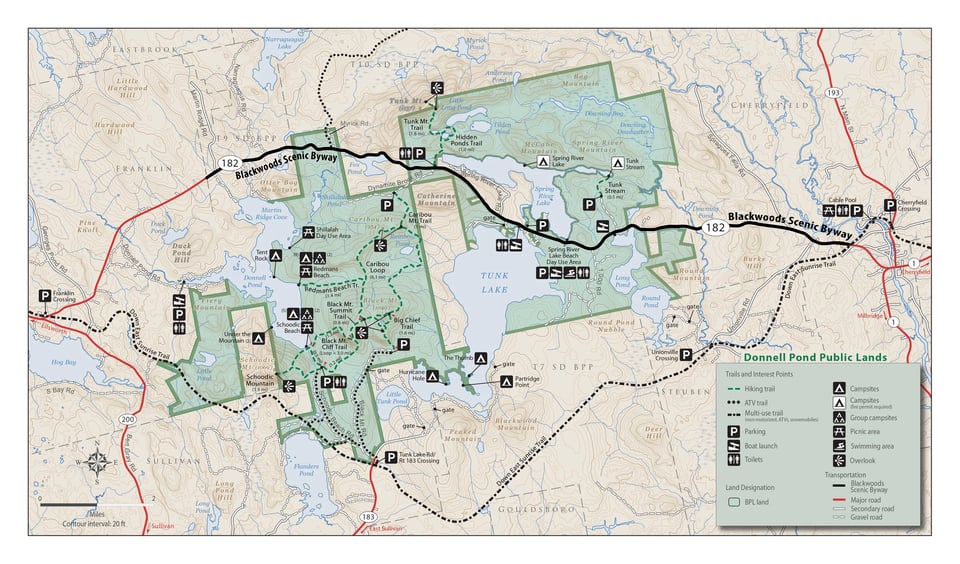
While it almost certain that Native Americans at least occasionally visited these lands, notable archaeological findings have not been discovered here. During the nineteenth century, attempts were made to extract gold, silver, and molybdenum from Catherine Mountain with little success, and the evidence of this activity is barely visible today. Logging has long been part of the history in the area and that tradition continues to this day.
Recreation, comfort, and leisure play prominently in the history of the area. For nearly two hundred years before the advent of refrigeration, ice from Tunk Lake was harvested during the winter and stored in sawdust-filled icehouses for eventual sale and distribution. A lakeside fish hatchery on Tunk Lake supplied small "fry" fish for sport fishing until the 1970's. Wealthy vacationers established an estate on the south end of Tunk Lake in the 1920s. This estate would later end up in the hands of famed Antarctic explore Admiral Richard E. Byrd and was a recognized historic landmark until it was destroyed by fire in the 1980s.
The land conserved at the Donnell Pond Public Lands was assembled in phases with the assistance of numerous conservation partners - particularly The Nature Conservancy, Maine Coast Heritage Trust, the Land for Maine's Future Program (which helped to fund more than half the acreage acquired), the Frenchman Bay Conservancy, and private landowners deeply committed to conservation.