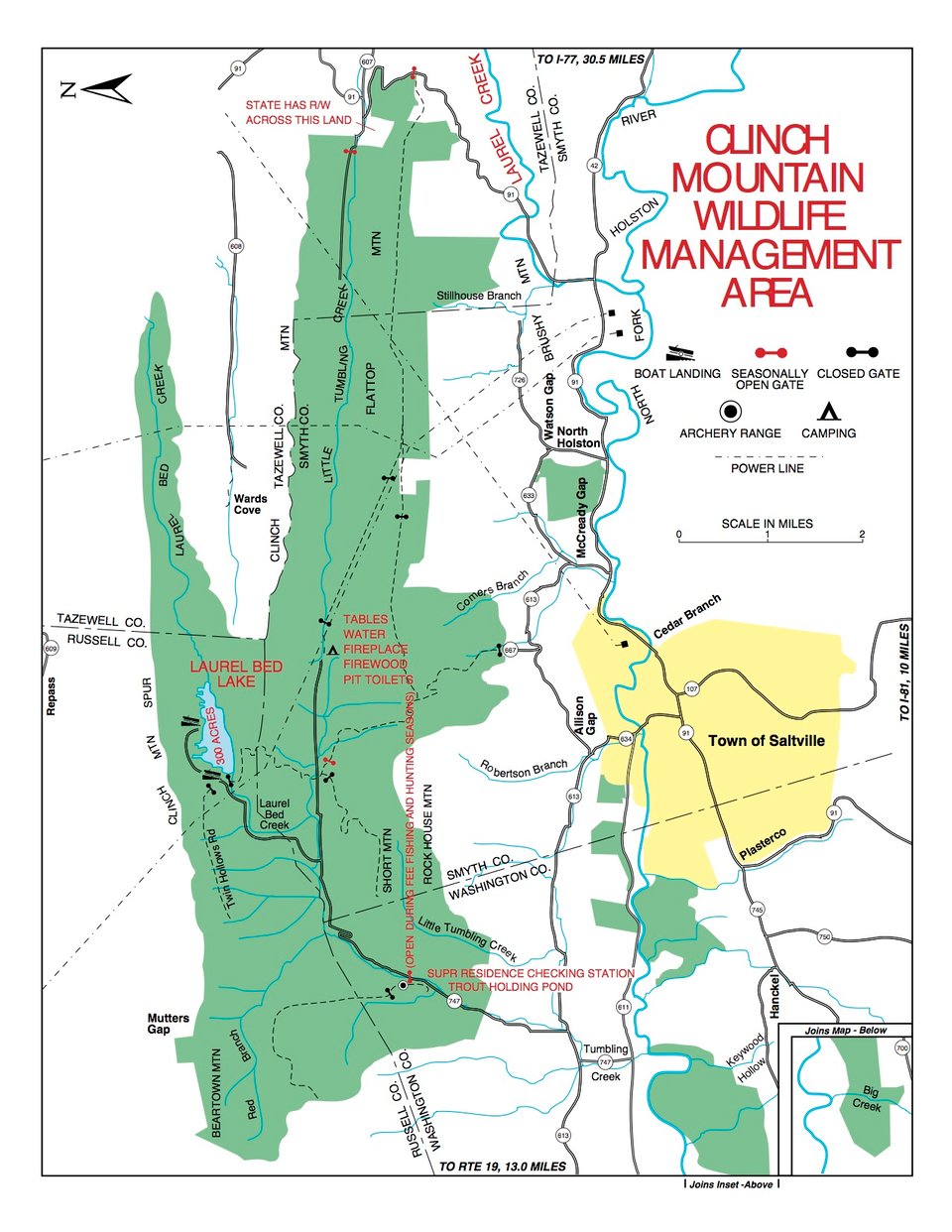
The Clinch Mountain Wildlife Management Area is the second largest in the Department’s management area system but has the distinction of being the most biologically diverse, due in large part to the vast differences in elevation on the area. The area’s 25,477-acres spread across Virginia’s southwest highlands, occupying parts of Smyth, Washington, Russell and Tazewell counties.
The area is dominated by mountains rising steeply from narrow valley floors. Due to difference in elevation a unique forest had developed. Tree species from both southern and northern forests are found. Elevations range from 1600 feet to 4700 feet atop Beartown Mountain. There is considerable water on the area; a 330-acre man-made lake, one major stream and several tributaries. The land that forms Clinch Mountain Wildlife Management Area was virgin forest until the late 1800s. Evidence of the narrow gauge railroad used during logging can still be seen, and some of the old rail bed is now part of the management area’s present road system.
Hunting
The deer herd is producing quality, antlered bucks. Both bear and turkey are increasing as populations respond to habitat management. Excellent grouse numbers are expected to follow forest management practices that increase and improve brood range and other needed habitats. Hunting success for gray and fox squirrel fluctuates from year to year, primarily due to variable mast production. Rabbit hunting is often good, though populations do change tremendously between years. Numerous beavers on the area have created ponds throughout the area, producing excellent waterfowl habitat. Wood duck hunters usually enjoy success on these ponds, particularly during the first segment of the duck season.