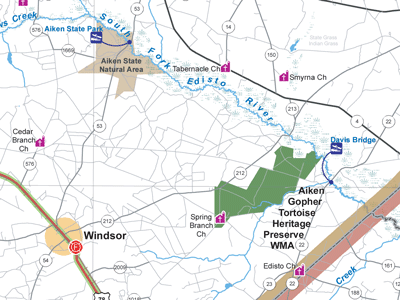
Be still. Watch. Listen. Open the doors to all your senses and you'll discover a brand new world of wonder and delight at Aiken Gopher Tortoise Heritage Preserve, near Aiken, S.C. The approximately 1,622-acre preserve is home to the rare and state-listed endangered gopher tortoise, a keystone reptile that provides shelter for many other species of animals in its 30-foot long underground burrows, which are about 10 to 15 feet deep. The preserve is the northernmost known location of the large, terrestrial tortoises, which have stumpy, elephantine hind feet.
Managed and owned by the S.C. Department of Natural Resources, the preserve also boasts a longleaf pine/wiregrass community that is one of the most endangered in the Southeast. Longleaf ecosystems once covered about 90 million acres in the southeastern United States. Today, only about 3 million acres remain. Aiken County has more longleaf pine than any other county in the state - 78,000 acres, or about one-fifth of the state's longleaf acreage. The sandy soil supports longleaf pine, turkey and blackjack oaks, as well as wildflowers and wildlife.
Longleaf ecosystems provide habitat for rare flora and fauna. Longleaf pine is resistant to fire, insects, diseases and hurricanes. It is fire-dependent, which means that prescribed burning is imperative. Prescribed burning creates favorable conditions for longleaf pine associates, such as wiregrass and many wildflowers, including passion flower, prickly pear, gopherweed, butterfly pea and polygonella and, of course, the gopher tortoise.
At the preserve, visitors might spot wildlife such as pine and corn snakes, but should be alert for venomous copperheads and timber rattlesnakes. Deer, wild turkey, quail, fox squirrels and broadhead skinks live here, as well as barred owls, red-tailed hawks, bluebirds, prairie and pine warblers, white-eyed vireos, brown-headed nuthatches and other songbirds. Some neotropical migrants that nest here include summer tanager, great crested flycatcher, Swainson's warbler, hooded warbler and blue grosbeak.