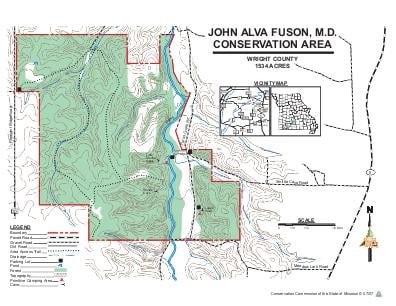
Driving DirectionsFrom Grovespring, take Highway 5 north 3.75 miles, then Smittle Cave Road west 1.75 miles to Parks Creek Road, which runs through the mostly forest area.
HighlightsFacilities/features: picnic area and intermittent stream (Parks Creek).
About This AreaJohn Alva Fuson, MD Conservation Area is in Wright County, 16 miles northwest of Hartville.The late Dr. Fuson practiced medicine throughout Wright County. To commemorate his years of service, his daughter, Maurine Fuson Raidler, left funds in her estate to purchase this area.This area is approximately 85 percent forested. The remainder of the tract is open land divided by several small pastures and creek bottom fields.A great diversity of wildlife is found here.The east side of the area features three caves: Smittle, Little Smittle and Lowell caves. Smittle Cave is one of the largest caves in the state, with over two miles of mapped passages. All caves on this and other Conservation Areas are currently closed or restricted to public access. The fungus that causes White-nose Syndrome in bats was found in Missouri in 2010, resulting in the Missouri Department of Conservation’s White-nose Syndrome Action Plan that limits public access to protect bats. WNS can be spread from cave to cave by bats or possibly on the gear of explorers. Privately owned caves are not affected by this Plan.Other natural communities on the area include two chert savannas, flatwoods, and a dolomite glade. The savannas, located on the west- and south-facing slopes of the area, are home to the reed bent grass and open-grown post and black oak and other canopy trees from 80 to over 200 years old. The dolomite glade has big and little bluestem grasses, flowering spurge, calamint, and white and purple prairie clover growing among dolomite outcrops.During your visit to the area, you may view various forest management practices designed to improve tree growth, quality, and species composition. The practices also help improve wildlife habitat and maintain watershed quality. Any disturbance is only temporary. Wildlife habitat management includes the creation of watering ponds and the manipulation of fields within the forest to provide added food sources. Timber harvests also produce forage and cover for wildlife.