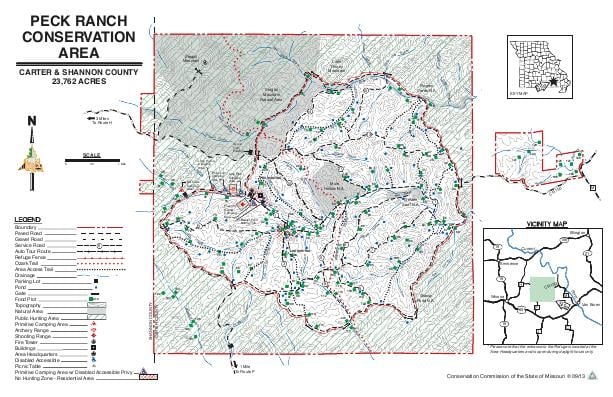
Driving DirectionsFrom Winona, take Route H east 5 miles, then continue east on gravel 7 miles to the area in Carter County.
HighlightsThis area is predominantly forest with nearly 1,500 acres in glades, along with quality woodland, cropland and some wetlands. Facilities/features: primitive camping, picnic areas, firearms range, viewing deck, two deer/turkey blinds, one intermittent stream and four Natural Areas (Grassy Pond, Goldenseal, Stegall Mountain and Mule Hollow).
About This AreaPeck Ranch Conservation Area is in northwest Carter County and eastern Shannon County, north of Fremont.The area consists of 23,763 acres of rugged, forested hills and hollows. Limestone and rhyolite glades provide natural openings among the oak-pine forest that dominates the region. Narrow ridges range from 900 to 1,000 feet in elevation. The area's highest point is Stegall Mountain, 1,348 feet above sea level. Rogers Creek and Mill Creek, which flow into the Current River, meander through the area.Peck Ranch began as the dream of a wealthy Chicago businessman. After acquiring 19,000 acres along Mill and Rogers creeks, George Peck, and other investors established the Mid-Continent Iron Company. Peck's dream included clearcutting Peck Ranch to supply the 100 cords of fuel per day needed to fire the smelter's blast furnaces. He employed 200 families and installed his own teams to haul cordwood. The company town which sprang up around the smelter became known as Midco.During World War I, the area continued to boom. The U.S. Government spent $3.5 million to install a wood alcohol distillery at Midco to be used in making ammunition. This period of prosperity was brief. The low-grade iron ore mill at Midco folded after the end of the war and a flu epidemic that ravaged the Ozarks. Peck returned to Chicago. The workers who remained in the area tried to eke out a living on the abused land.When prohibition ended, the demand for white oak barrels surged. Griffith Stave Co., bought the remaining timber rights on Peck Ranch and revived the area's timber industry. The boom was short-lived, and Peck Ranch was once again for sale.In 1945, the Missouri Department of Conservation purchased Peck Ranch for wild turkey management. Today, diverse management techniques, including prescribed fire and forest products harvesting methods, are being used to maintain and restore the many natural communities on Peck Ranch.This conservation area was acquired in part through the Pittman-Robertson wildlife Restoration Act administered by the U.S. Fish and Wildlife Service.