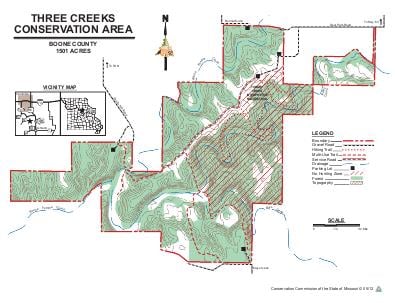
Driving DirectionsFrom Columbia, take Highway 63 south 5 miles, then Deer Park Road west 1.75 miles.
HighlightsThis area area is predominantly forest. Many of the old fields containing mainly non-native species are being converted to native warm season grasses and wildflowers. Facilities/features: primitive camping, hiking, bicycle/horse trails, three intermittent streams (Turkey, Bass and Bonne Femme creeks), and Hunters Cave.
About This AreaThree Creeks Conservation Area is in Boone County (halfway between Columbia and Ashland). The area takes its name from the three creeks that run through the area: Turkey Creek, Bass Creek, and Bonne Femme Creek. The rugged forest features scenic bluffs, intermittent streams, geologic formations, and old eastern red cedar trees. Through the years, the area was treated like much of Missouri's land. The timber was grazed and logged and occasional fires swept through the area. Because of these practices, the land has suffered sheet and gully erosion.Three Creeks Conservation Area was considered for purchase as a result of substantial public input and interest in protecting the general Three Creeks area from further urban development, which would destroy its appearance and natural features.Moreover, Three Creeks Conservation Area was acquired to maintain and manage representative plant and animal communities and to provide outdoor recreational and educational opportunities in an urbanizing region of central Missouri.Much of the land in the general area was purchased by freed slaves following the Civil War. Generally, the tracts were small (usually 40 or 80 acre parcels). Land which could be seeded to pasture for grazing or plowed with a horse was farmed into the 1930's when many families could no longer support themselves on the small tracts of land. Many had to sell their property due to the economic conditions during the Depression. The reduction in the number of landowners has continued up to the present time. Seven identifiable house sites have been located on the initial 685 acres.The forest was harvested heavily after the turn of the century and harvesting has continued on an occasional basis until the time of purchase by the Department. Frequent fires and grazing of the area were common practices until the last few decades.