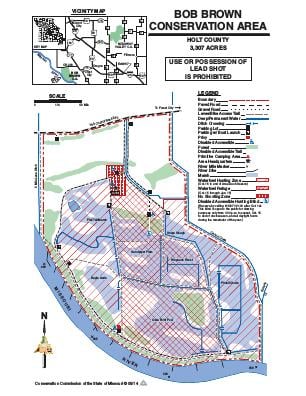
Driving DirectionsFrom Forest City, take Holt County Road 290 west 2.50 miles to the area.
HighlightsThis area contains more than 1,000 acres of wetlands along with cropland, old fields, grassland, and forest.
About This AreaThis area which was named for the late Robert A. Brown, a St. Joseph conservationist, consists of 3,307 acres of bottomland and is bounded by the Missouri River for three miles.The rich bottomland soils support mixed lowland hardwood forest, and also are planted with cool- and warm-season grasses and agricultural crops. A major portion of the land is restored Missouri River wetlands, which provide habitat for migrating waterfowl as well as resident species. The area is primarily managed to provide wetland habitat. The area's proximity to Squaw Creek National Wildlife Refuge (five miles) provides excellent opportunities to observe bald eagles, shorebirds, and migratory waterfowl.Wildlife viewing is encouraged. Public use is allowed throughout the year, but non-hunters are prohibited from the waterfowl shooting area during waterfowl hunting season, unless they are members of a hunting party authorized to use the area and remain with the group.This area has been designated by Audubon Missouri as an Important Bird Area (IBA). IBAs are sites that have been identified by Audubon as those that are the most crucial for bird population, due to their abundance and/or diversity of birds present. Peak times for viewing waterfowl occurs in mid-November and mid-March. Pedestrians will find good wildlife viewing from the levee roads and trails. Mid-March to early April usually offers an excellent opportunity to view waterfowl in their breeding plumage. From late April through May, the boardwalk to the accessible blind is an excellent area to look for songbirds while the road between Ringneck Roost and Sandpiper Flats (which is closed shortly before and during waterfowl seasons) provides a chance to view shorbirds, wading birds, and marsh birds such as black-crowned night herons, great egrets, greater yellowlegs, yellow-headed blackbirds, and soras.